
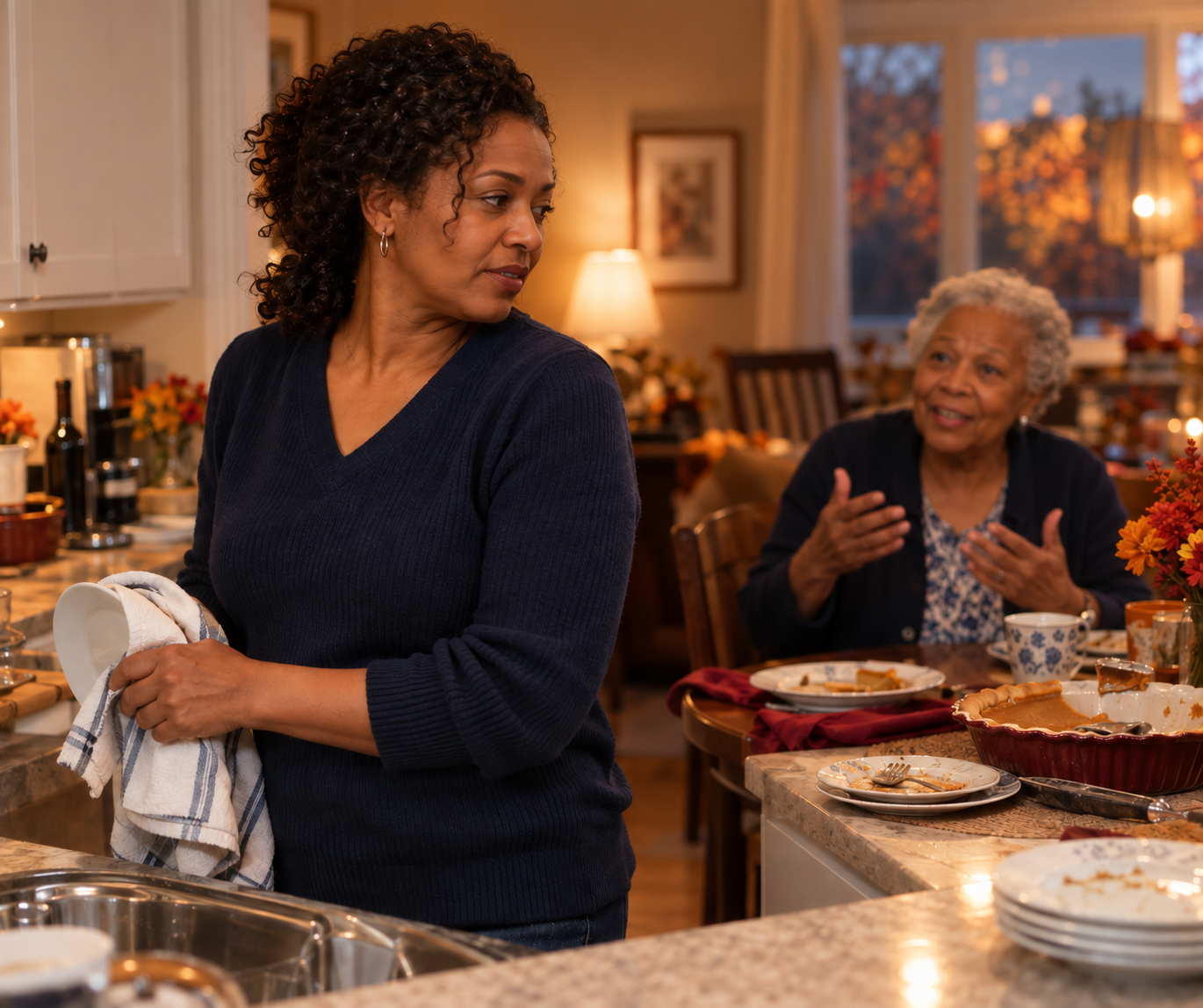
The plates are cleared. The football game is on in the next room. You’re standing at the sink with a dish towel, and your mother is telling the same story she told an hour ago.
Nobody else seems to catch it. But you do.
In fact, that moment happens in thousands of Canadian homes every Thanksgiving. It arrives quietly, usually in a kitchen, usually while everyone else is laughing somewhere else. And it leaves you with a question you didn’t expect to carry home.
Is Mom okay?
This Month, We’re Talking About That Moment
October at Ideal Caregivers 4u is about one thing. The conversation that follows the noticing.
We hear from families all year. But the calls change after Thanksgiving. That’s because people saw something in person that months of phone calls never showed them.
They are rarely in crisis. Instead, they’re simply uneasy. And they don’t know what to say to the person they love.
This series is for them. Over the next four weeks, we’ll cover what to look for and how to raise it. No pressure. No scare tactics. Just the steps that actually work.
Why a Holiday Visit Shows You More
Phone calls are easy to manage. After all, “I’m fine” takes two seconds to say. Video calls, meanwhile, only show a face and a bit of wall behind it.
A visit, however, shows you everything else.
You open the fridge. Then you climb the stairs behind them. On the counter, the mail has been piling up. Meanwhile, the pill organizer by the sink still looks full.
Most changes in older adults arrive slowly. As a result, a person living alone may not notice them at all. Neither does someone who sees them every day. In short, fresh eyes catch what familiar eyes stop seeing.
Timing matters here. The Canadian Institute for Health Information studied new admissions to long-term care. About 1 in 9 could potentially have stayed at home with the right supports. Noticing early keeps more doors open. Waiting closes them.
It’s also worth remembering how many seniors are managing on their own. Statistics Canada’s 2021 Census found that roughly 1 in 5 Canadians aged 65 to 69 live alone. Furthermore, that share climbs steadily with age. For many families, therefore, a holiday visit is the only honest look they get all year.
What Families Can Do
Notice without diagnosing
Your job this weekend is not to figure out what’s wrong. Rather, it’s simply to pay attention.
Write things down. Keep it factual. “Fridge was almost empty.” “Used the handrail on every stair.” “Asked about my job three times.”
One unusual day means very little. A pattern, on the other hand, means something. But you can only see a pattern if you wrote it down.
Wait for the quiet moment
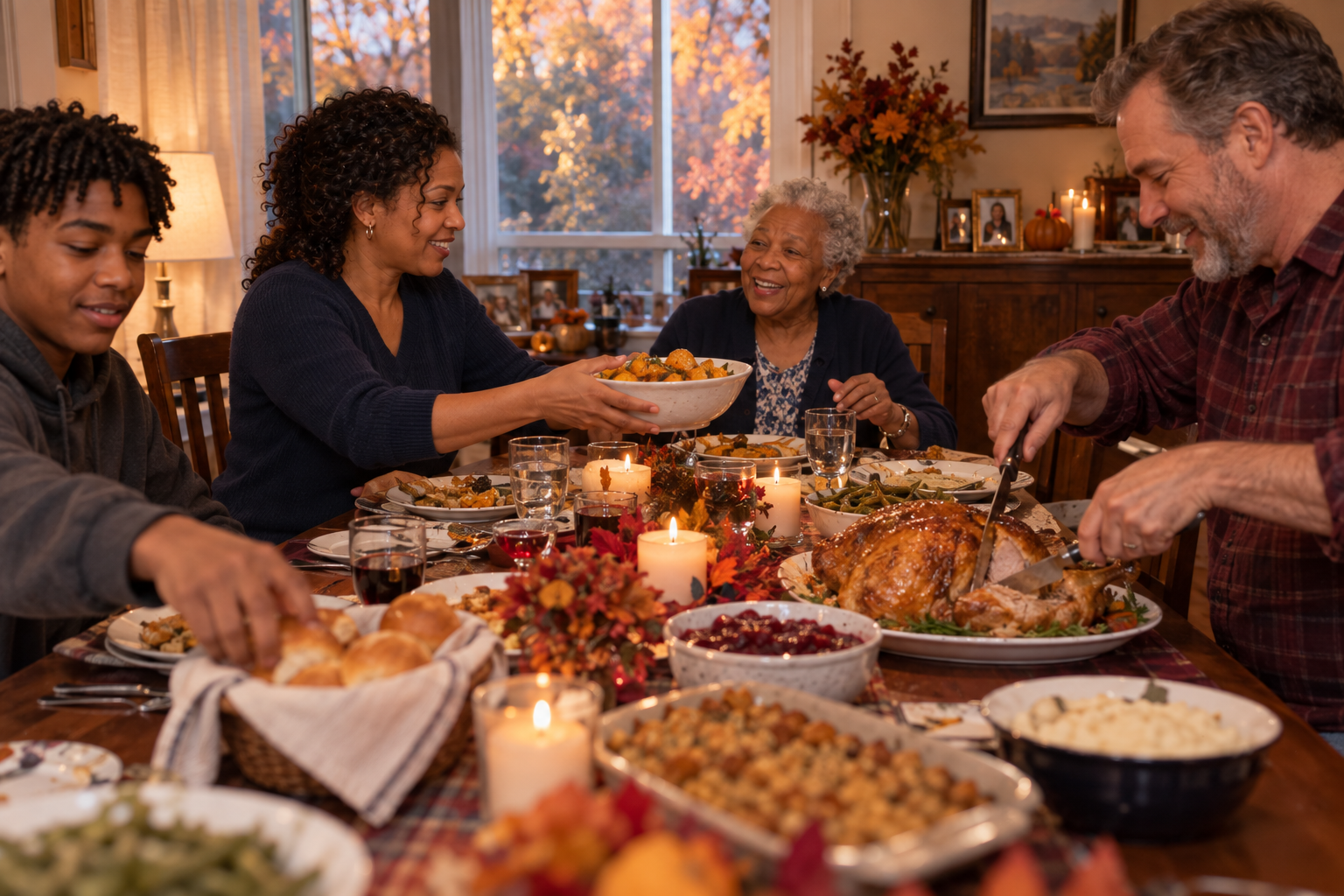
The dinner table is the worst place to raise a concern. Your loved one is surrounded by family. Nobody wants to feel discussed in front of an audience.
Instead, wait for the calm after. A walk. A drive to the store. Or coffee the next morning before anyone else is up.
The setting does half the work for you.
Aim for an opening, not an answer
A first conversation is not a decision. In other words, you’re not solving anything this weekend.
Ask, don’t tell. “How have things been going, really?” opens a door. “You can’t keep living like this” slams it shut.
Expect “I’m fine.” That’s normal, though, and it’s not the end. In most cases, families need two or three conversations before anything changes.
What’s Coming This Month
We’ve built the whole month around the six steps families actually take:
- What to watch for during holiday visits — the small signs that phone calls hide
- Starting the conversation — what to say, and what to avoid
- Keeping your loved one in the driver’s seat — why dignity makes help easier to accept
- Getting everyone on the same page — siblings, long-distance family, and sharing the load
- Understanding your options — the wide middle ground between “fine alone” and “moving out”
- Making a first plan together — turning worry into a few clear next steps
We’ll close the month with a family meeting guide!
How Professional Support Helps
Sometimes families need a second opinion they can trust.
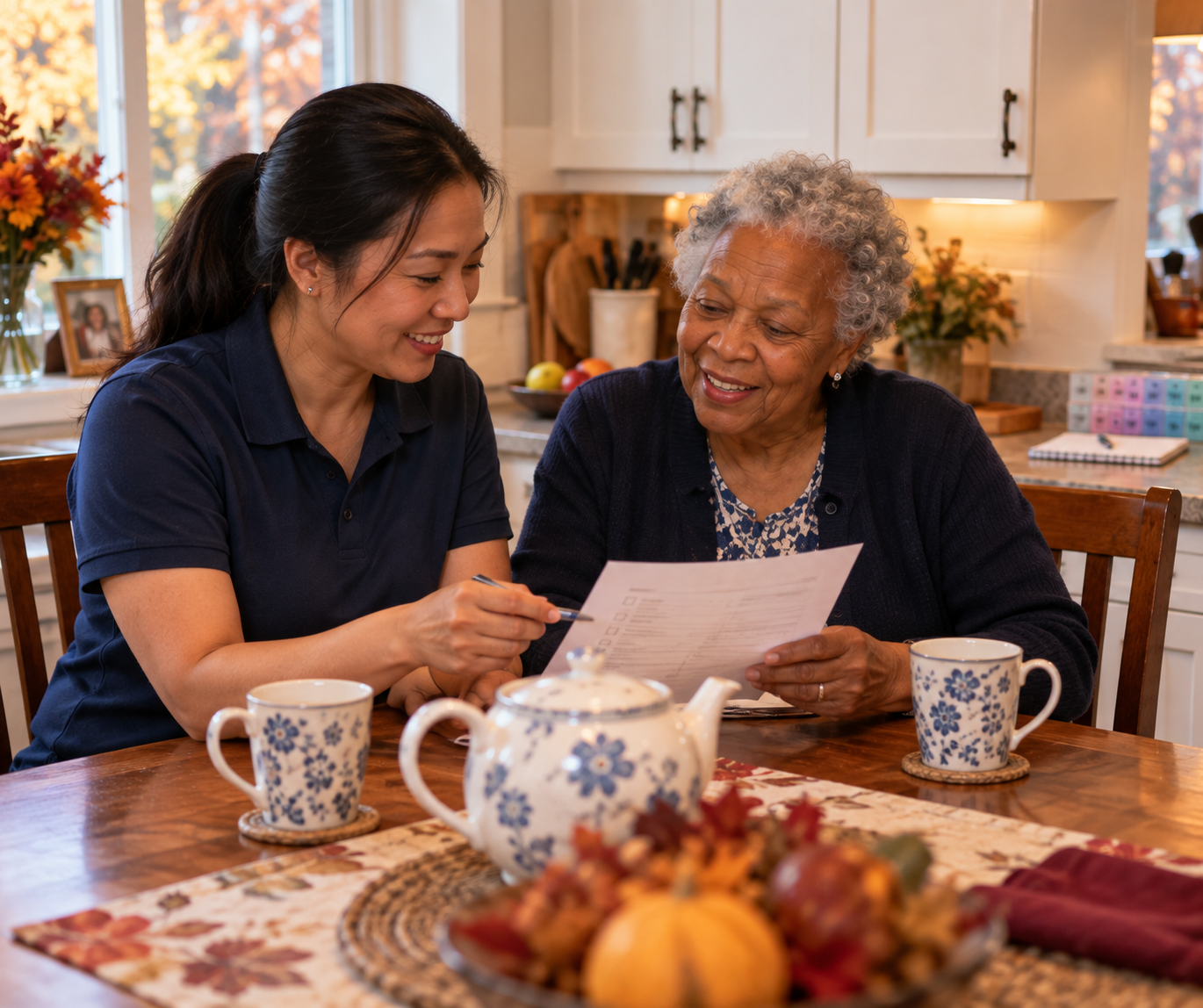
Our Senior Home Safety Specialists complete a 250-point home safety assessment. They look at the things you might feel awkward inspecting yourself. For example, lighting, stairs, bathrooms, and trip hazards.
Our nurses offer wellness check-ins. These look at health, medications, and how someone is really managing day to day. As a result, you get a clear picture instead of a worry.
And our Senior Living Advisor service is free. If your loved one bristles at family advice, an advisor can talk with them directly. No pressure, no sales pitch. In truth, many parents hear it better from someone outside the family.
We also offer companionship care for families whose first concern is loneliness rather than health. It’s often the gentlest place to start.
Take the Guide With You
We’ve put everything in this series into one free booklet.
Around the Table Noticing Changes and Starting the Care Conversation includes all six steps, plus three printable tools. There’s a holiday visit observation checklist, a page of conversation starters, and a family meeting agenda.
Print it before your Thanksgiving visit. Bring the checklist with you.
Frequently Asked Questions
What if my parent gets angry when I bring it up?
That’s common, and it’s usually fear rather than anger. Stay calm and don’t push. Say you love them and you’ll talk again another time. A door left open is still a win.
Should I talk to my siblings first?
Usually, yes. Comparing notes helps everyone start from the same facts. It also stops your parent from feeling outnumbered later.
Where does Ideal Caregivers 4u provide care?
We serve families in Ottawa, Mississauga, Markham, Pickering-Ajax, Oshawa-Whitby, and Edmonton. Our full range of services is available across all six communities.
If You Noticed Something This Weekend
You don’t have to figure it out alone. And you don’t have to have a plan before you call.
A conversation with us costs nothing and commits you to nothing. We’ll help you make sense of what you saw.
Call 1-866-372-0603 or visit idealcaregivers4u.com/services/ to learn more.
Every family’s situation is unique, but no one should have to navigate senior care alone. Ideal Caregivers 4U provides personalized, non-medical in-home support that helps seniors remain safe, comfortable, and independent at home while giving families true peace of mind.
Learn how we can help by calling 1-866-372-0603 or clicking the link below: