Your dad has lived in the same house for forty years. He knows every step in the dark. That’s exactly why nobody notices the hall runner that slides.
Familiar homes hide risks in plain sight. A cord has always run along that wall. The bath mat has always curled at the edge. Meanwhile, nobody sees them anymore because they’ve always been there.
This week, we’re taking a different approach to home safety for seniors. Instead of a long list, we’ll walk through the house together, one room at a time. Grab a notepad and come along.
Why the Home Is Where Most Falls Happen
It’s easy to think of falls as an outdoor, icy-sidewalk problem. In reality, CARP reports that more than half of falls happen indoors, often in a person’s own home.
Most of them happen during ordinary moments. Getting up at night. Stepping out of the tub. Reaching for a mug on a high shelf.
November adds another layer. With the clocks back, it’s dark before dinner. So hazards that are easy to step around at noon become hard to see by five o’clock.
That’s why a walk-through matters now, before winter fully settles in.
The Walk-Through: Seven Stops
Start at the front door and finish in the living room. At each stop, ask yourself one question: “Could I walk through here safely with my eyes half-closed?”
Stop 1: The front entrance
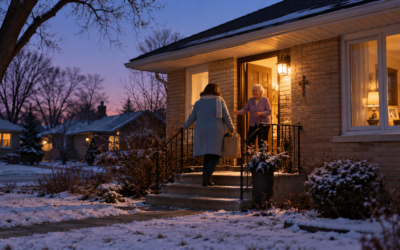
Is the porch light working, and does it come on before dark? Are there railings on both sides of the steps? Inside, is there a chair for taking off boots, and a mat that doesn’t slide?
Stop 2: The stairs
Look for sturdy handrails that run the full length of the stairs. Check that there’s a light switch at both the top and the bottom. Finally, make sure nothing gets “parked” on the steps, like laundry, books, or shoes.
Stop 3: The hallway
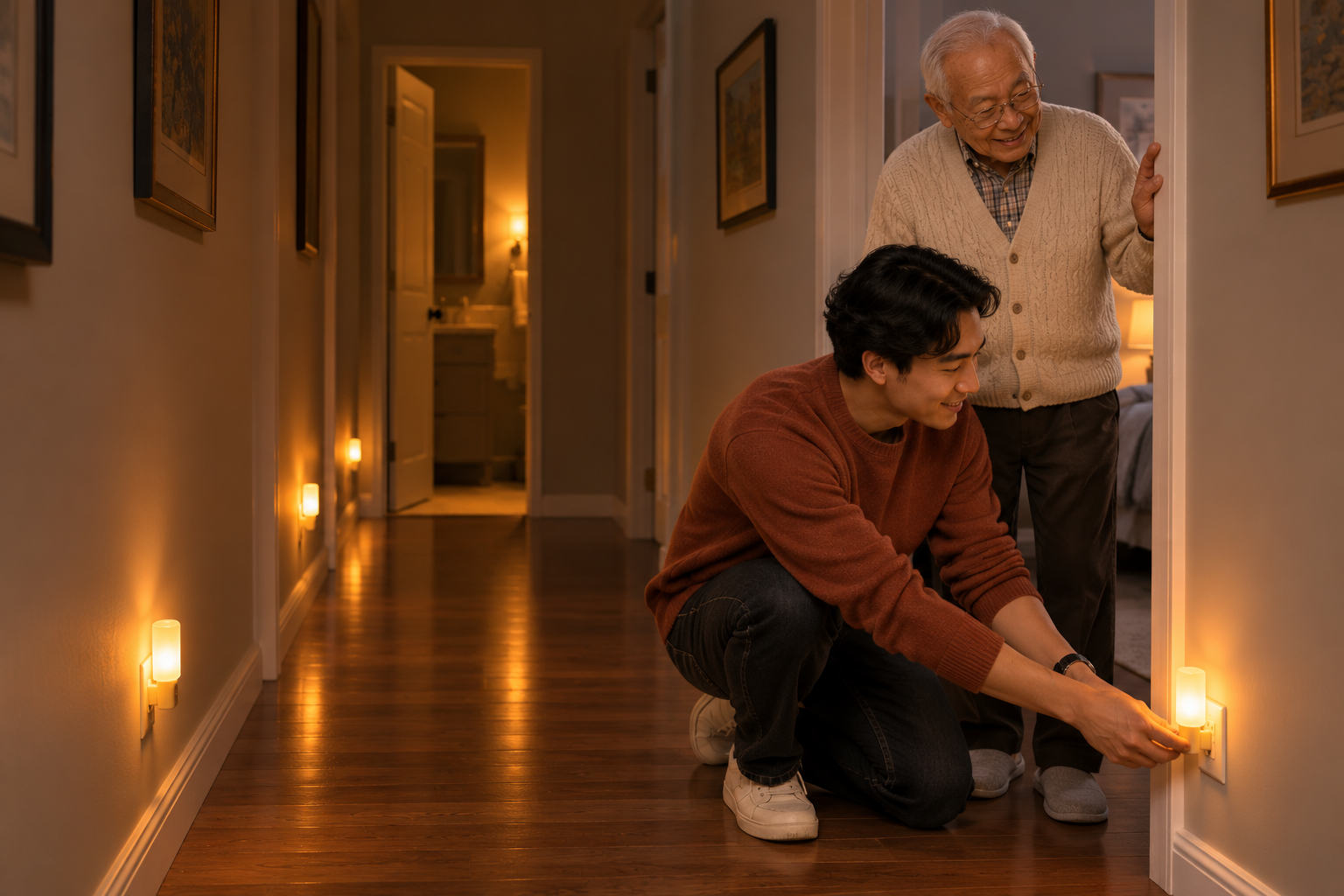
This is the route your loved one walks at 2 a.m. Are there loose rugs, cords, or furniture edges along the way? Is there a night light, or do they walk it in the dark?
Stop 4: The bathroom
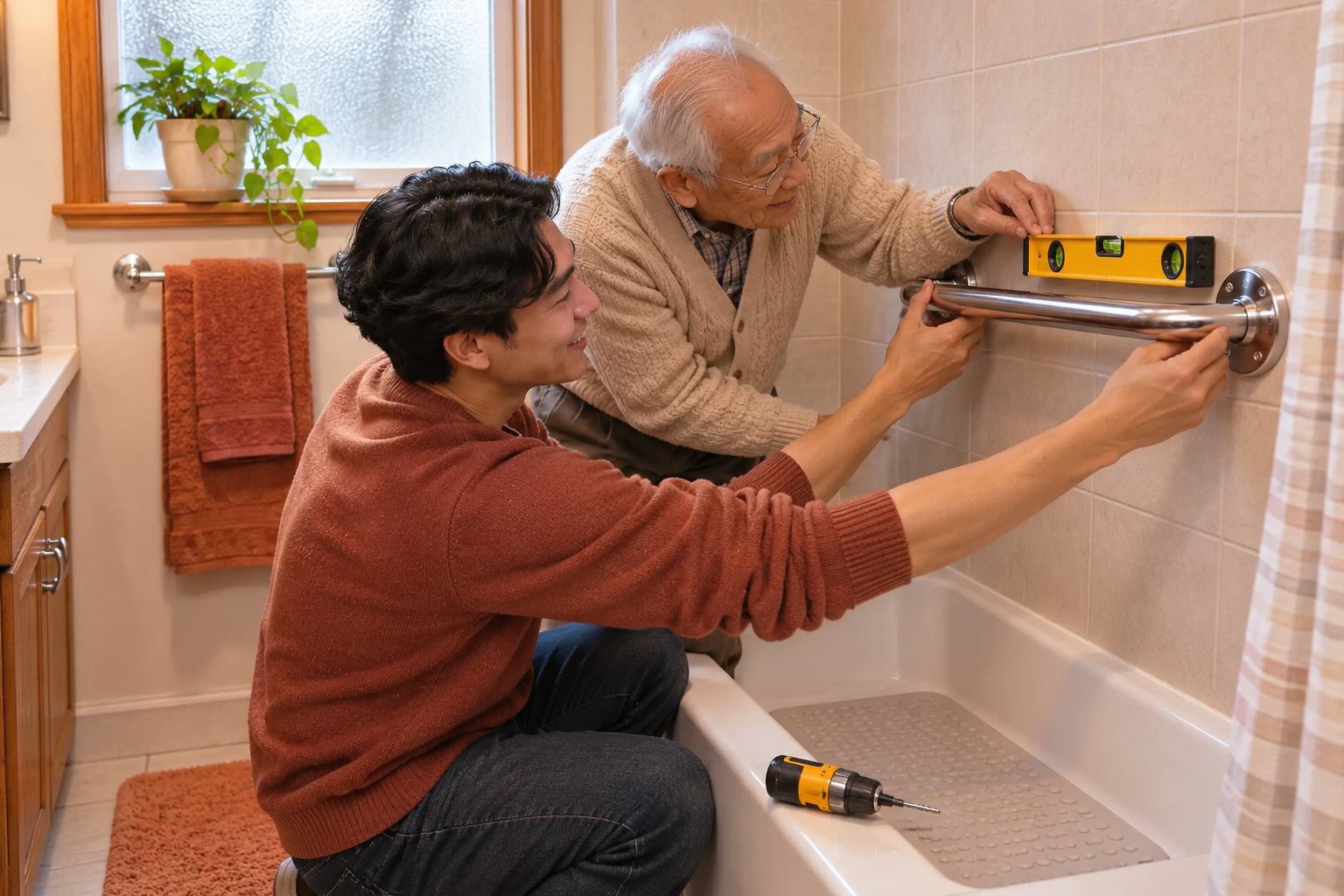
This is the most important stop. Wet floors, hard surfaces, and tight spaces make it the riskiest room in the house. Look for grab bars by the toilet and in the tub or shower. Then check for a non-slip mat, both inside and outside the tub.
Stop 6: The kitchen
Are everyday items stored between waist and shoulder height? If they need a step stool to reach the coffee, that’s a red flag. Slippery floor finishes and small spills are worth a look too.
Stop 3: The hallway
This is the route your loved one walks at 2 a.m. Are there loose rugs, cords, or furniture edges along the way? Is there a night light, or do they walk it in the dark?
Stop 7: The living room
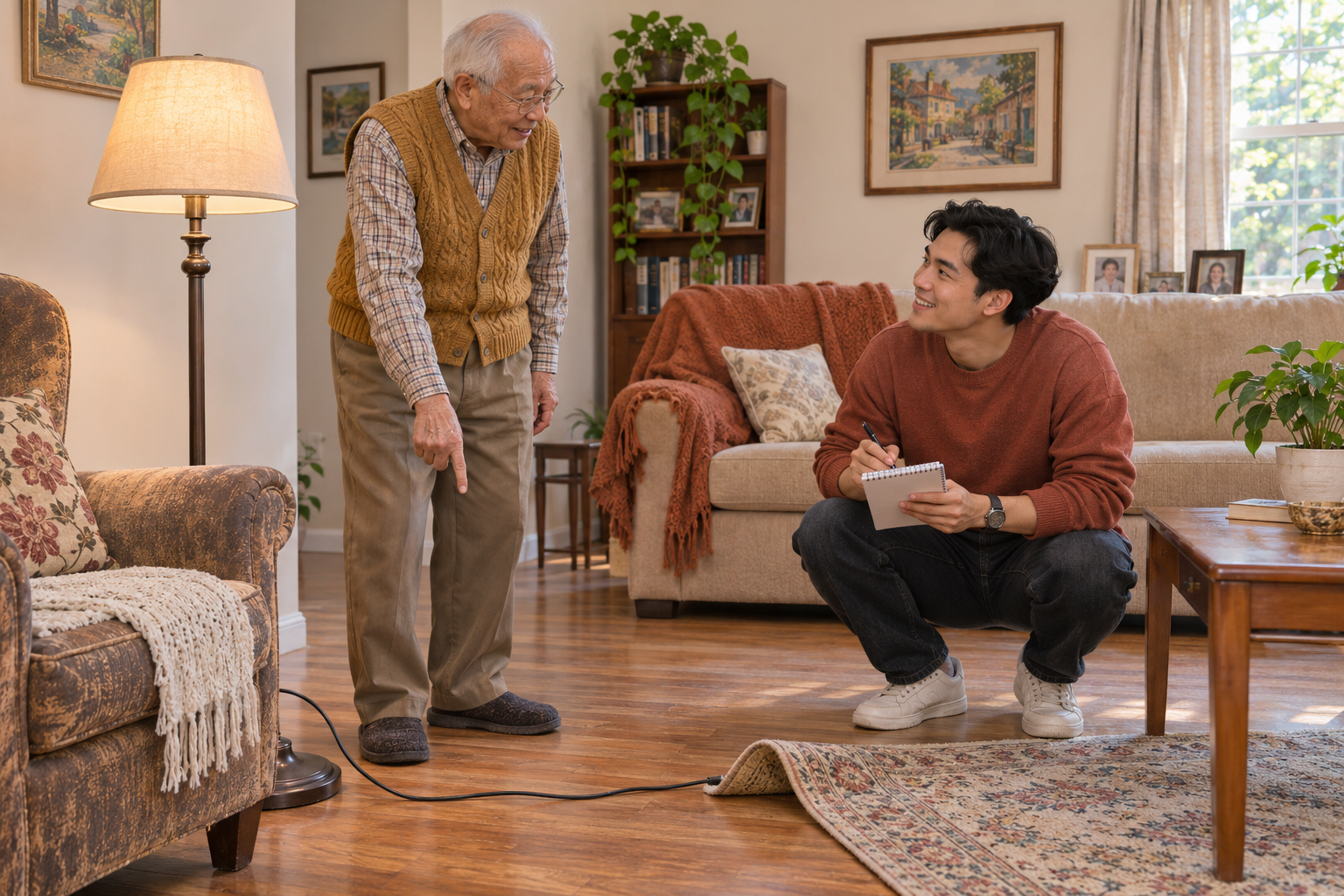
Look at the chairs. Do they have armrests to push up from? Are walkways clear of footstools, magazine racks, and pet beds? Finally, check for cords running across the floor from lamps or the TV.
What Families Can Do for Home Safety for Seniors
Do the walk-through at night
Here’s the step most families skip. Turn off the main lights and walk the route from bed to bathroom. You’ll spot dark corners and tripping spots you’d never see in daylight.
Fix the bathroom first
If you can only do one thing this month, start here. Grab bars, a non-slip mat, a raised toilet seat, and a shower chair cover most of the risk. Plus, most of these items are affordable and easy to install.
Make the changes together
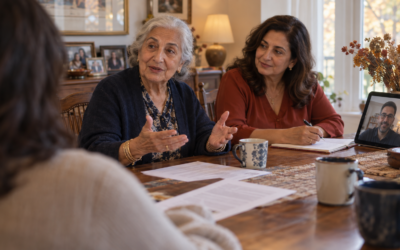
Nobody likes being told their home isn’t safe. So walk through it with your loved one, not around them. Ask what feels tricky to them. When they help choose the changes, they’re far more likely to keep them.
Small Fixes, Big Difference
Good home safety for seniors doesn’t need a renovation. Many of the best fixes cost very little:
- Plug-in night lights along the bedroom-to-bathroom route
- A rubber backing for rugs, or simply removing them
- Cord covers, or rerouting cords along walls
- A touch lamp or remote switch beside the bed
- Moving the most-used kitchen items to a lower shelf
Parachute, Canada’s injury prevention charity, sums up fall prevention in three words: move, improve, and remove. That last word, remove, is what a walk-through is all about.
How Professional Support Helps
A family walk-through catches a lot. Still, a trained set of eyes catches what familiarity hides.
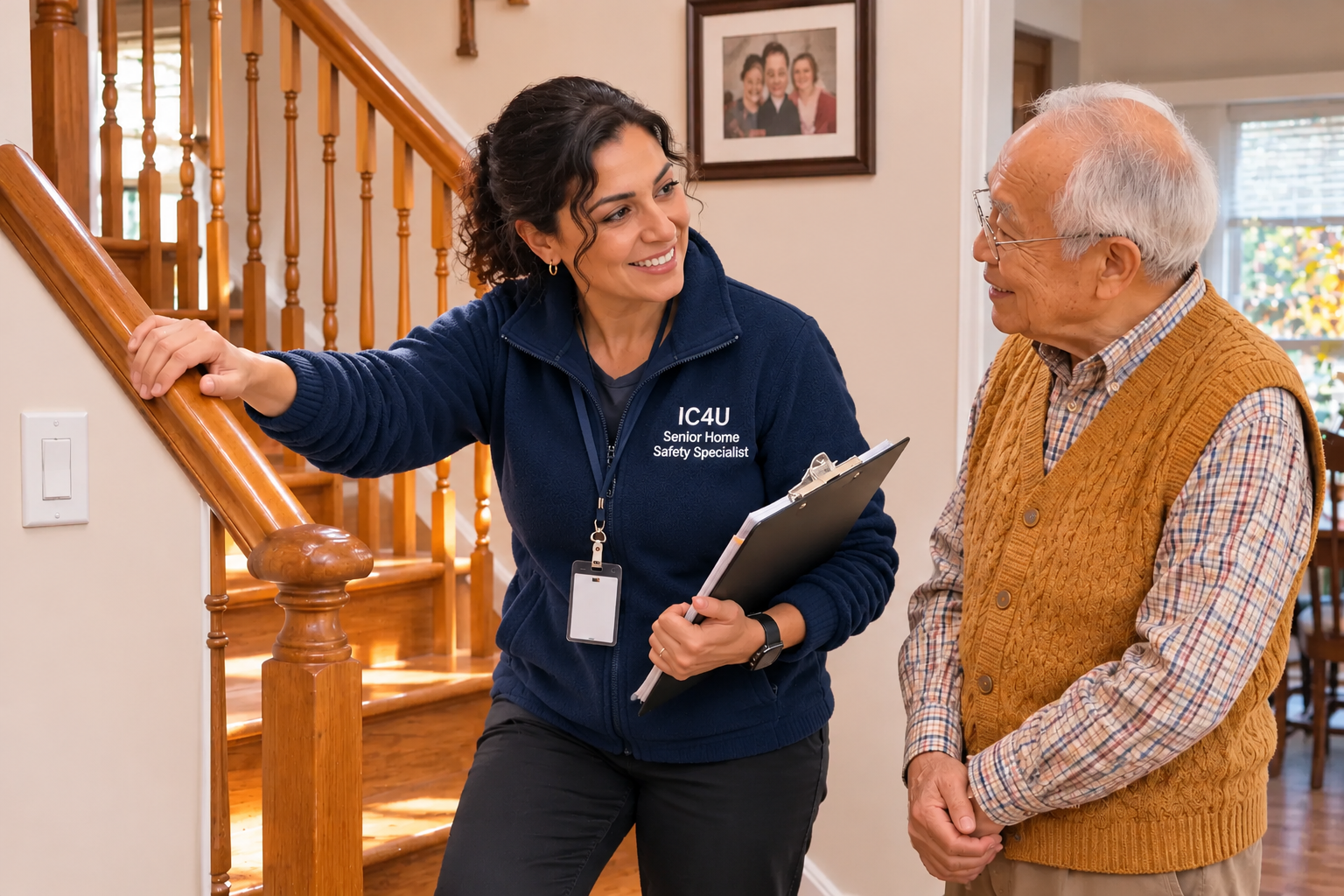
Our Senior Home Safety Specialists complete a 250-point home safety assessment. They check entrances, stairs, bathrooms, lighting, and everything in between. Afterward, families get a clear, prioritized list of what to fix first.
Our caregivers also keep an eye out during every visit. If a new hazard shows up, they flag it early. Think of a curling rug or a burnt-out bulb on the stairs.
Some seniors need a hand in the bathroom. Our Personal Health Care services include help with bathing, dressing, and grooming. That support takes some of the riskiest moments of the day off their plate.
Keep the Checklist Handy
This walk-through is the first section of our free November guide. It’s called Staying Steady: Balance, Blood Sugar, and Safety for Seniors This Winter. You can download it right here on this page. It includes a printable Room-by-Room Fall Check, so you can tick off each fix as you go.
Frequently Asked Questions
Which room is the most dangerous for seniors?
The bathroom. Wet floors, hard surfaces, and the motions of sitting and standing make it the room where many serious falls happen.
How often should we check a senior’s home for hazards?
At least once a year, and again after any change in health, mobility, or medication. Late fall is a great time, before winter arrives.
Do you offer home safety assessments in my area?
Yes. Our team provides home safety assessments and in-home care in Ottawa, Mississauga, Markham, Pickering-Ajax, Oshawa-Whitby, and Edmonton.
Let’s Walk Through It Together
Not sure where to start, or short on time? We can help.
Call us at 1-866-372-0603 to book a home safety assessment or just ask a question. It’s a friendly conversation, with no pressure. You can also browse all of our in-home care services.
Every family’s situation is unique, but no one should have to navigate senior care alone. Ideal Caregivers 4U provides personalized, non-medical in-home support that helps seniors remain safe, comfortable, and independent at home while giving families true peace of mind.
Learn how we can help by clicking the link below or calling us at
1-866-372-0603