
You’re not going to your parent’s house to run an assessment. You’re going for dinner.
But you will see things this weekend that no phone call has shown you in months. And if you know what you’re looking at, a visit becomes the most useful hour your family gets all year.
This isn’t about catching anyone out. It’s about gathering facts, gently, so your family can make good decisions later.
Here’s what experienced caregivers look for.
Start With the House, Not the Person
Homes are honest. They show wear before people admit to it.
Walk through slowly and notice what’s changed since your last visit.
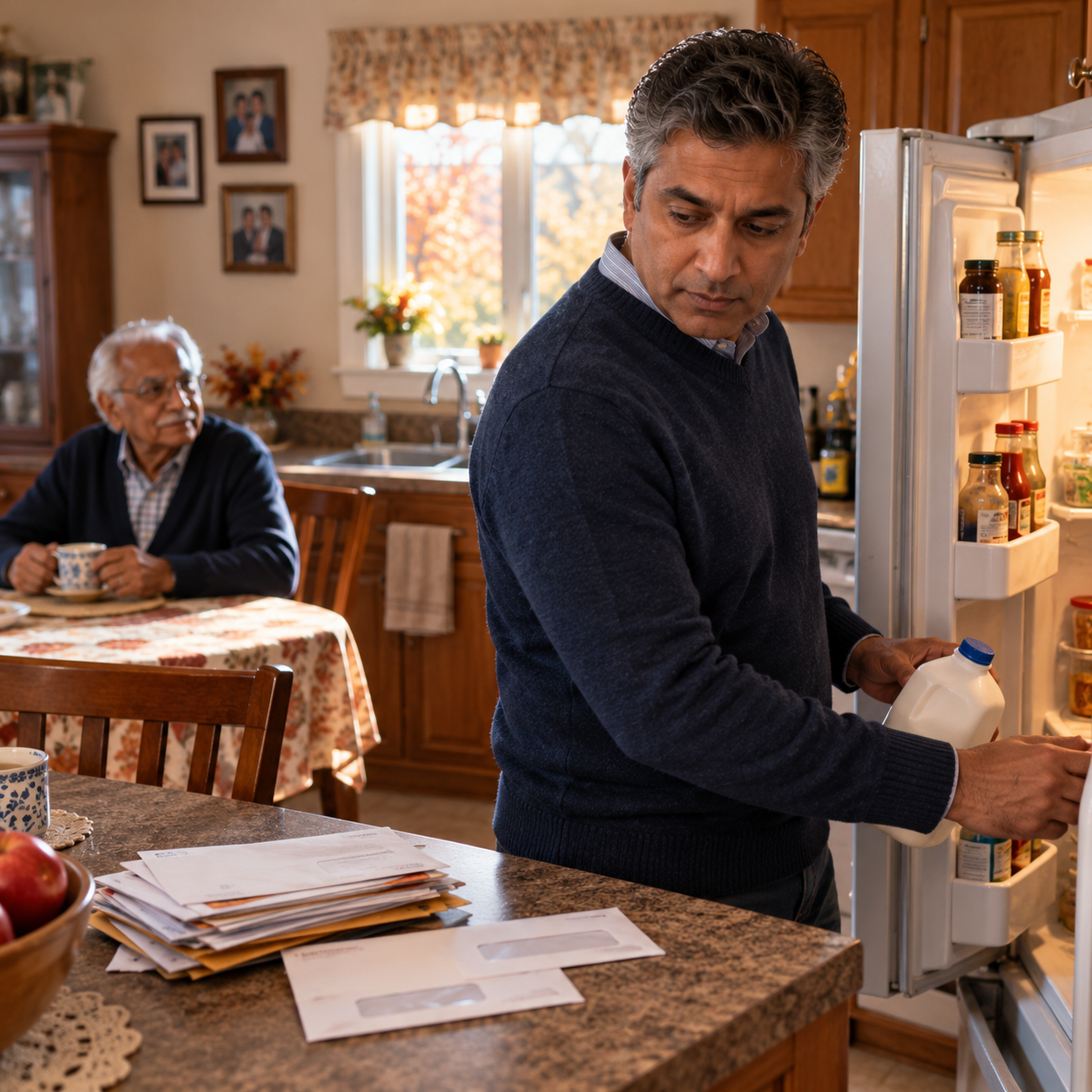
In the kitchen: Open the fridge. Is it nearly empty, or full of expired food? Are there burn marks on pots, or a kettle left on? Does the cooking look simpler than it used to?
On the counters and desk: Look for unopened mail, especially envelopes with red type. Stacked bills and second notices often show up before anyone mentions money trouble.
In the bathroom: Check whether grab bars are being used or ignored. Notice damp towels on the floor, or a tub that looks hard to step into.
Around the house: Watch for clutter in walkways, loose rugs, burnt-out bulbs, and dying plants. Consider whether the housekeeping has slipped from their usual standard.
In the driveway: New dents and scrapes are worth noticing. So is a car that hasn’t moved in weeks.
Then Watch the Person
Physical changes are often easier to spot than cognitive ones. Start there.
Notice weight. Clothes that hang loose, or a belt on a tighter notch, both tell you something. Look at grooming, laundry, and whether they’re dressed for the weather.
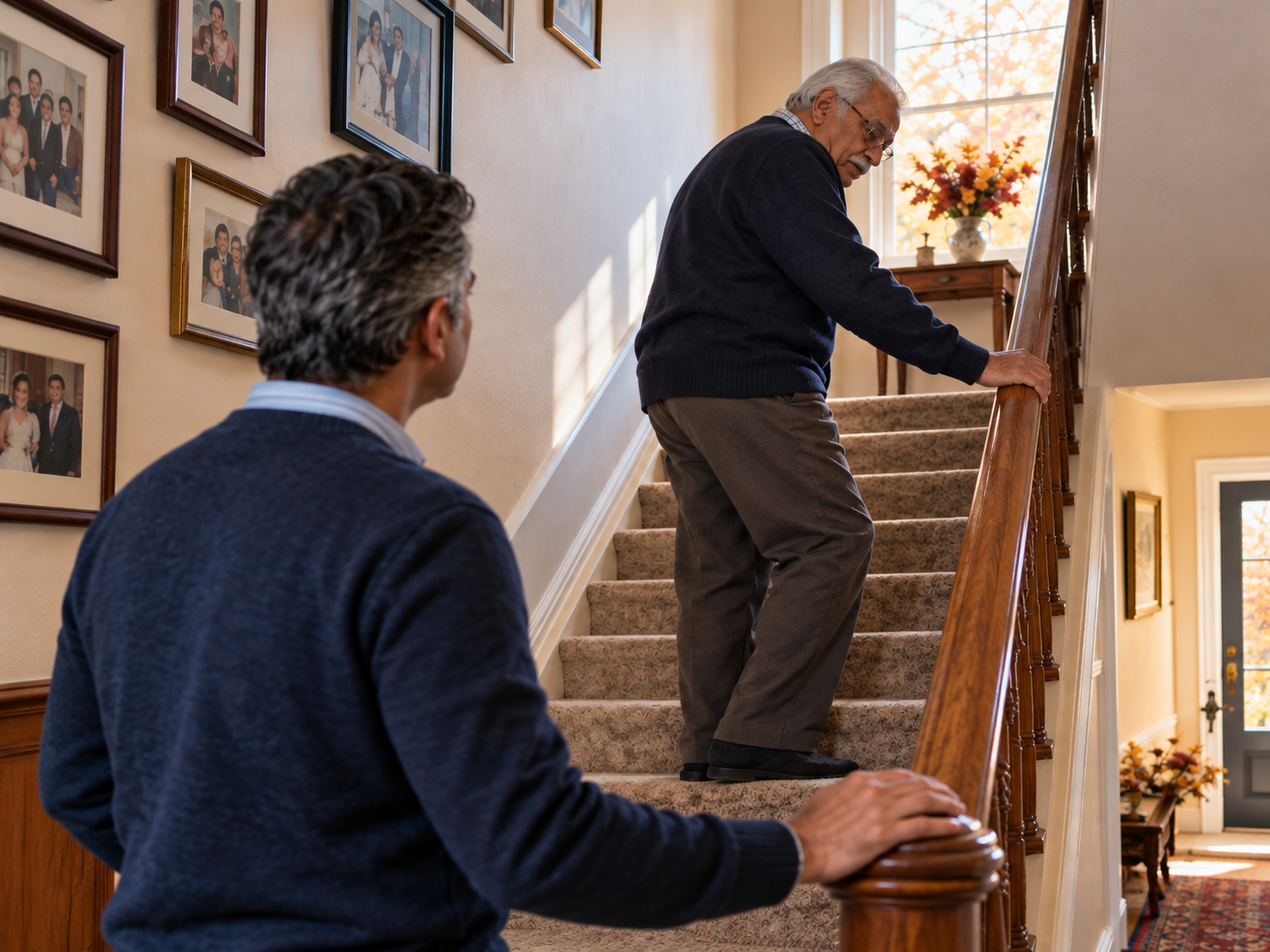
Watch how they move. Do they push off the armrests to stand? Is there a hand on the furniture crossing a room? Stairs one at a time now?
This matters more than most families realize. The Public Health Agency of Canada reports that half of all falls serious enough to send a senior to hospital happen right at home. The warning signs usually show up first in how someone moves around their own living room.
Then listen. Not to what they say, but to what’s gone missing from it.
“I don’t drive at night anymore.” “I stopped going to cards.” “I haven’t seen Marg in ages.”
A shrinking world often arrives before anything else does.
Don’t Skip the Medicine Cabinet
Medications deserve their own look, because problems here are common and fixable.
Check whether pill bottles match the dose dates. A bottle that’s still full when it should be half empty suggests missed doses. One that’s nearly empty too early suggests doubling.
Look for duplicates from different pharmacies. Check expiry dates. Notice whether there’s a system, like an organizer or a written schedule, or whether it’s all guesswork.
It’s worth asking who reviews it all. The Canadian Deprescribing Network notes that more than one in three Canadian seniors takes at least one potentially inappropriate medication. Those prescriptions are linked to falls, fractures, and hospital stays.
A single question at the next doctor’s appointment can change that.

What Families Can Do
Write it down as you go
Memory is a poor witness, especially when you’re worried. Keep notes on your phone as things come up.
Stay factual. “Fridge had milk and condiments.” “Used the handrail on every stair.” Avoid conclusions like “she’s declining.”
Facts hold up in a family conversation. Interpretations start arguments.
Look, but don’t snoop
There’s a line between noticing and searching, and your parent will feel it immediately.
Offer to help instead. “Want me to put the groceries away?” gets you into the fridge honestly. “Mind if I grab a towel?” gets you into the bathroom. Helping is the best cover there is, because it isn’t cover at all.
Compare notes, then wait a beat
One unusual day proves nothing. Everyone has an off Sunday.
Talk to whoever else was there. Ask the sibling who visited last month. Meanwhile, resist the urge to act on the first thing you saw.
Patterns are what matter. Give yourself a week before deciding anything.
Some Signs Shouldn’t Wait
Most of what you notice can be handled slowly. A few things can’t.
Call their doctor promptly if you see sudden confusion or a sharp change in behaviour. The same goes for a recent fall, signs of dehydration, or unexplained bruising. Wandering, getting lost on familiar routes, and signs of financial exploitation also need a fast response.
In an emergency, call 911.
How Professional Support Helps
There’s a limit to what a weekend visit can tell you. Families often leave with a feeling rather than a picture.
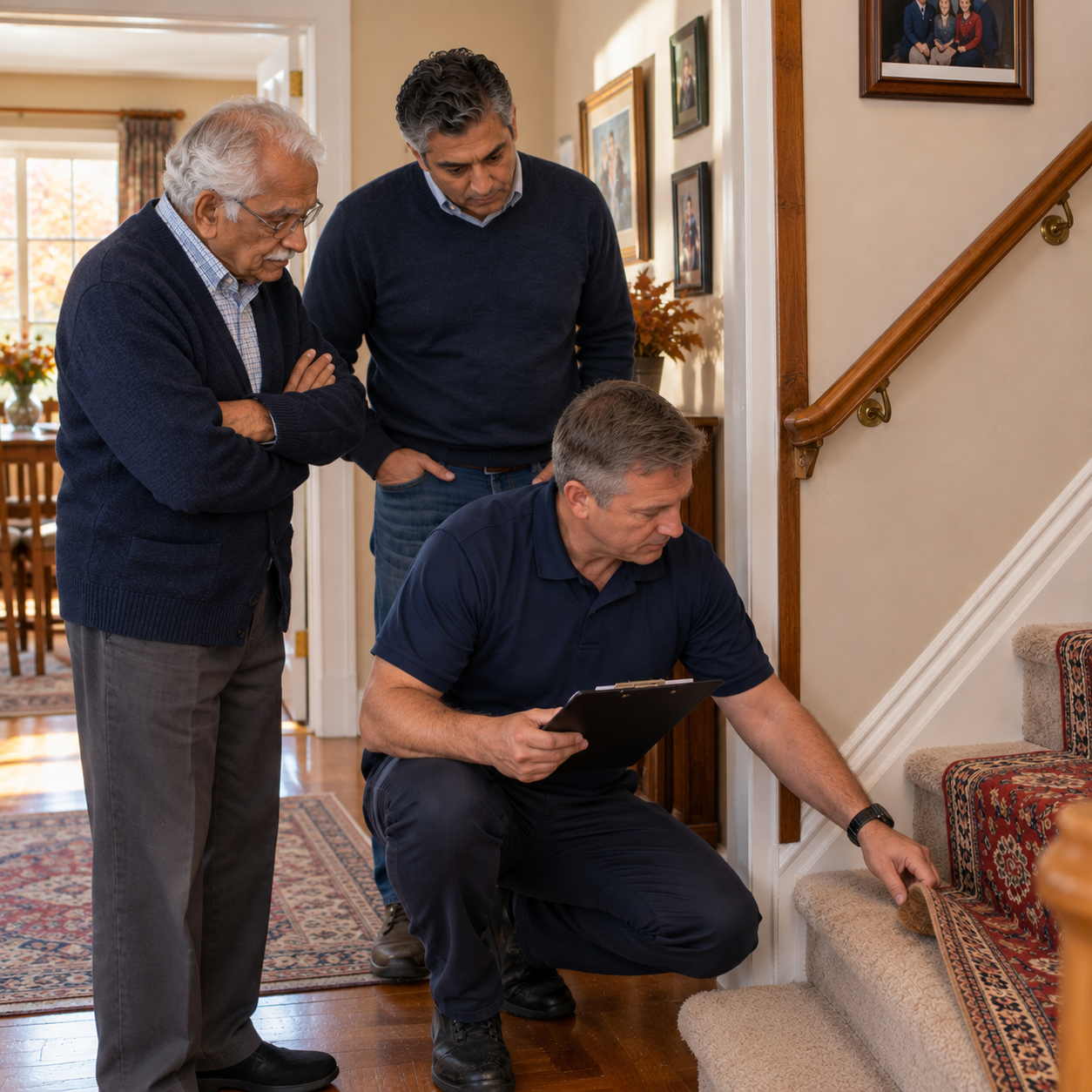
Our Senior Home Safety Specialists complete a 250-point home safety assessment. They check lighting, stairs, bathrooms, flooring, and the details families rarely think to inspect. You get a written picture instead of a nagging worry.
Our clinical nursing team offers wellness check-ins that look at health, medications, and daily function. A nurse can spot what a loving eye misses, and can flag medication concerns worth raising with a physician.
Both work well as a starting point. Neither commits your family to anything.
Take a Checklist With You
Our free October booklet is called Around the Table Noticing Changes and Starting the Care Conversation. Inside, you’ll find a printable Holiday Visit Observation Checklist.
Print it before you go. Tick what you notice, add a short note, and share it with family afterward. It turns a vague worry into something your family can actually discuss.
Frequently Asked Questions
Isn’t it disrespectful to look through my parent’s home?
Noticing isn’t snooping. Offer to help with groceries, dishes, or laundry, and you’ll see what you need to see while being genuinely useful.
What if I only notice one or two small things?
Write them down and let it sit. One-off changes are normal. It’s the pattern across visits that tells you something real is happening.
Where does Ideal Caregivers 4u provide home safety assessments?
We serve families in Ottawa, Mississauga, Markham, Pickering-Ajax, Oshawa-Whitby, and Edmonton. A specialist can visit your loved one’s home in any of these communities.
Not Sure What You Saw?
Plenty of families call us after a holiday visit with nothing more than a feeling. That’s a perfectly good reason to call.
We’ll talk it through with you. No pressure, no commitment, and no cost.
Call 1-866-372-0603 to speak with someone who’s helped hundreds of families sort through exactly this.
Every family’s situation is unique, but no one should have to navigate senior care alone. Ideal Caregivers 4U provides personalized, non-medical in-home support that helps seniors remain safe, comfortable, and independent at home while giving families true peace of mind. Learn how we can help by clicking the link below or by calling 1-866-372-0603