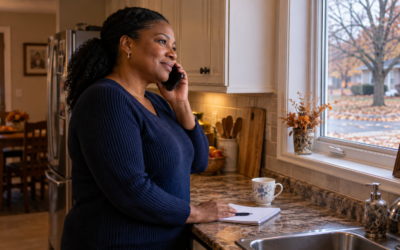
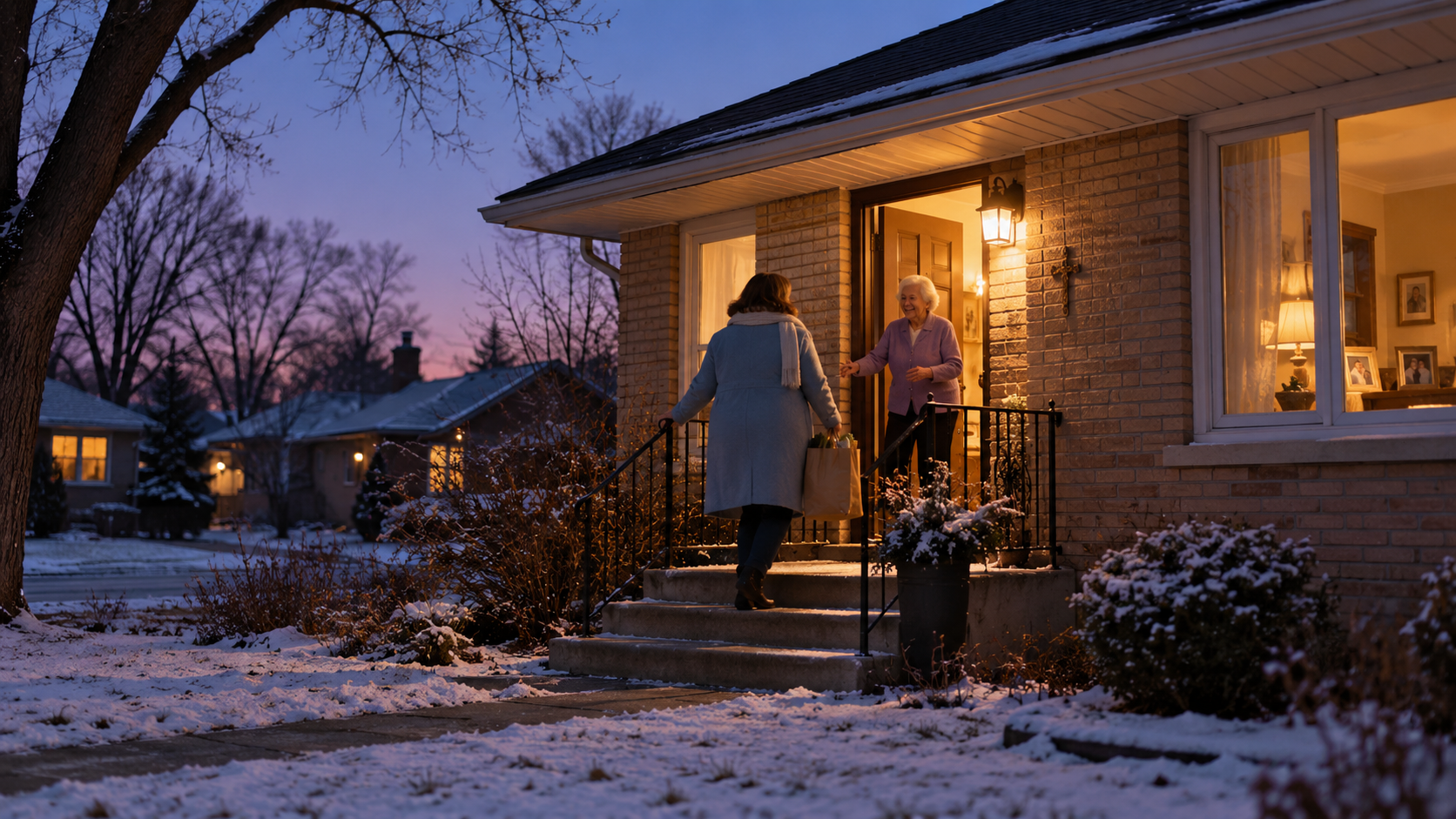
The clocks fell back on Sunday. By five o’clock this week, it’s already dark.
For most of us, that’s a small annoyance. For an older parent, however, it quietly changes the whole day. The walk to the mailbox happens in fading light. Dinner gets pushed later, and so do the evening pills. Soon enough, the first ice turns the front steps into a question mark.
November is Fall Prevention Month in Canada. So this month, we’re looking at senior fall prevention through one idea: staying steady. That means steady on their feet. And for seniors living with diabetes, it means steady blood sugar too.
Why November Is a Turning Point
Falls are the leading cause of injury-related hospital stays for older Canadians. In fact, the Public Health Agency of Canada reports that 20 to 30 percent of seniors fall each year. Half of the falls that lead to a hospital stay happen at home.
Winter stacks the odds. Here’s what shifts this time of year:
- Less daylight. Hallways, stairs, and entryways get harder to see, especially in late afternoon.
- Ice and snow. A driveway that was clear at noon can be slick by suppertime.
- Less movement. Many seniors stay in to stay safe. Over time, though, weaker legs raise the risk of falling indoors.
- Looser routines. Meal times drift, appetites change, and colds come through. As a result, medication times can slip as well.
None of these are dramatic on their own. Together, they add up.
Why Balance and Blood Sugar Belong Together
At first, falls and diabetes might seem like separate topics. In practice, they’re closely linked.
When blood sugar drops too low, a person can feel dizzy, shaky, or confused. That’s a risky moment to be walking down a hallway. Lows can also happen overnight, right when someone gets up for the bathroom.
Over time, diabetes can damage nerves in the feet. This dulls feeling, so it’s harder to sense the floor underfoot. Vision changes can also make a step edge or an icy patch harder to judge. On top of that, some medications add lightheadedness.
Diabetes Canada has helpful resources for families learning the signs of highs and lows.
That’s why this month’s series covers both. Our Friday posts focus on senior fall prevention. Meanwhile, our Tuesday posts focus on everyday diabetes care. Both point to the same goal: a steady, confident winter at home.
Signs Your Loved One May Be Less Steady Than They Seem
Many seniors don’t mention a near-miss. They may not want to worry you. Or they may worry you’ll push for changes they’re not ready for.
So watch for the quieter clues:
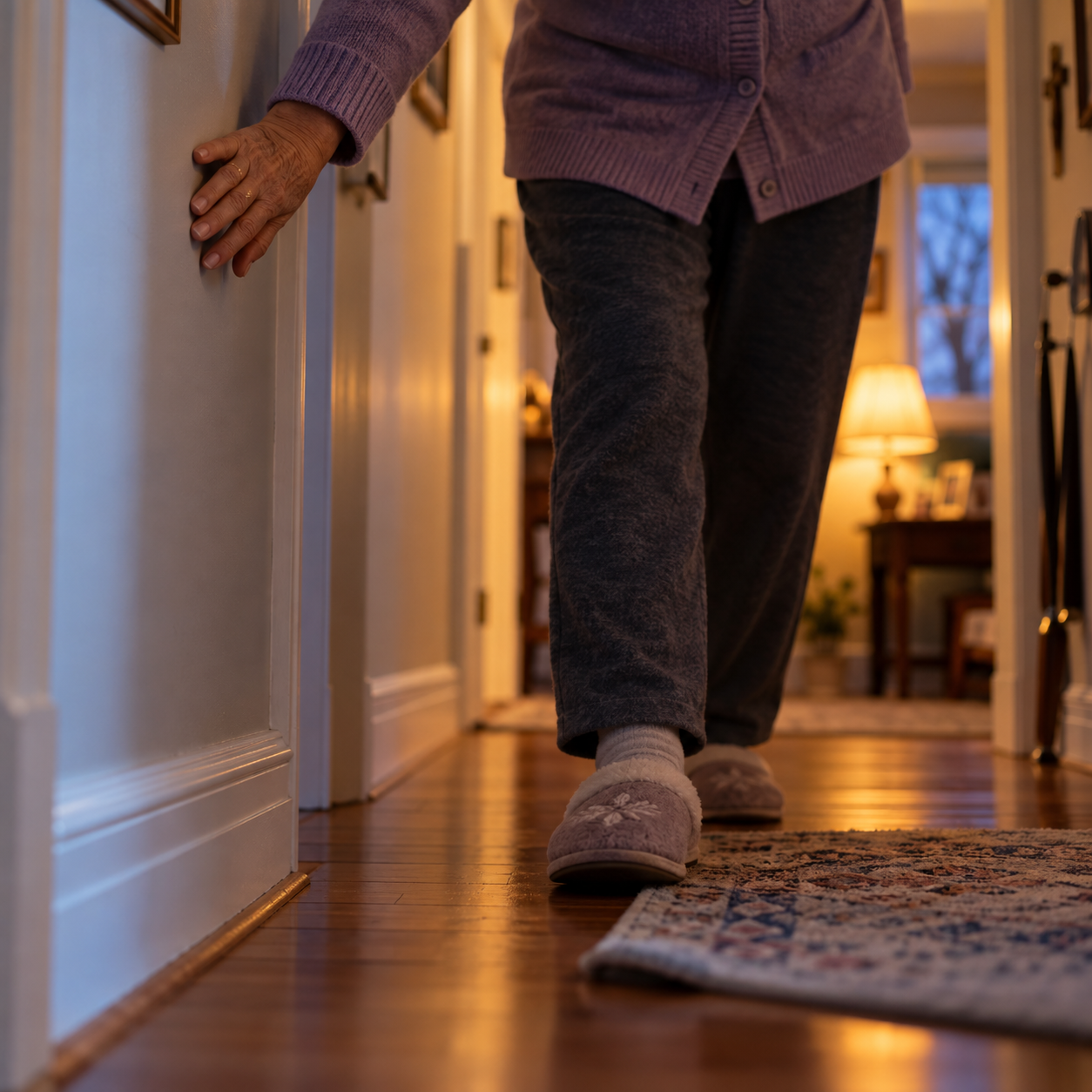
- Holding onto furniture or walls while walking
- New bruises they can’t explain
- Getting up from a chair slowly, or in several tries
- Skipping outings, especially after dark
- Shuffling, or wearing worn slippers everywhere
- A blood sugar meter that hasn’t been used in days
- Mentioning feeling “a bit woozy” or “off”
One sign on its own isn’t cause for alarm. Still, two or three together are worth a closer look.
What Families Can Do for Senior Fall Prevention
Visit at dusk, not just at noon
A midday visit shows the house at its best. Instead, drop by around 4:30 on a weekday. Notice how dark the hallway gets. Check whether the porch light is on and the steps are clear.
You’ll learn more in ten minutes at dusk than in an afternoon of sunshine.
Ask two simple questions
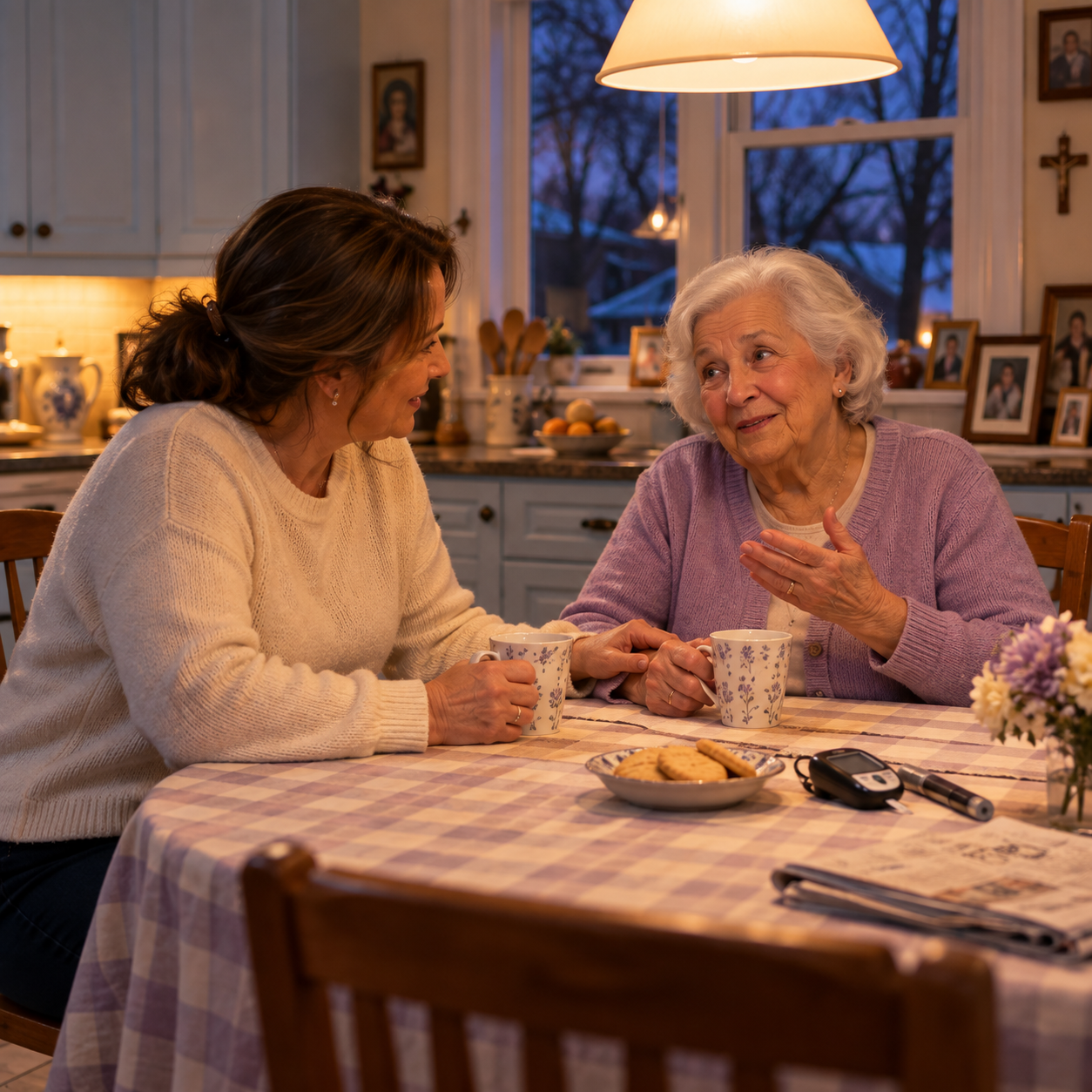
Keep it casual, over tea or on a phone call. “Have you felt dizzy or lightheaded lately?” Then: “Any slips or close calls?”
Near-misses matter. They’re often the warning before a real fall. If diabetes is part of the picture, gently ask when they last checked their blood sugar.
Pick one fix this week
Don’t try to overhaul the house in a weekend. Choose one thing instead. For example, add plug-in night lights along the route from bed to bathroom. Or book snow clearing before the first storm.
One fix, done this week, beats a long list that never gets started.
How Professional Support Helps
Families can do a lot on their own. Still, a trained set of eyes catches what familiarity hides.
Our Senior Home Safety Specialists complete a 250-point assessment of the home. That includes entryways, stairs, bathrooms, and lighting. Heading into winter, they check outside steps and railings too. Afterward, families get a clear list of what to fix first.
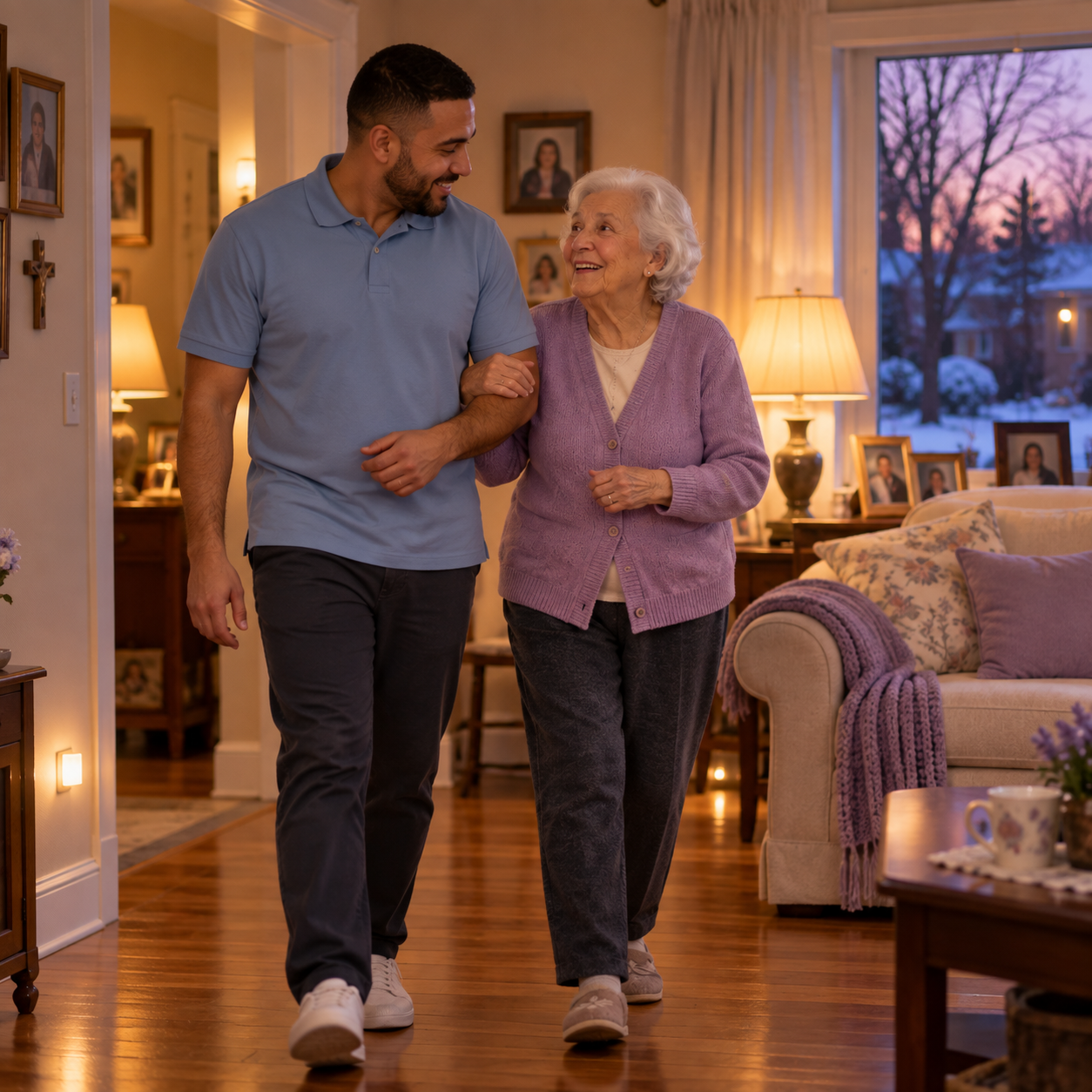
Beyond the house itself, our caregivers see a senior’s routine up close. They offer medication reminders, help with meals, and support with bathing and dressing. They also notice small changes, like a new shuffle, a skipped lunch, or a dizzy spell after standing. When that happens, they let the family know early.
For seniors who get up often at night, Awake Overnight Care adds a caregiver who stays awake until morning. You can explore our full range of in-home care services anytime.
What’s Coming This Month
Here’s the plan for the rest of November:
- Friday, Nov. 6: The room-by-room walk-through
- Tuesday, Nov. 10: Everyday diabetes routines
- Friday, Nov. 13: When blood sugar affects balance
- Tuesday, Nov. 17: Feet first
- Friday, Nov. 20: Winter outdoors
- Tuesday, Nov. 24: Cooking for steady blood sugar
- Friday, Nov. 27: What to do if a fall happens
Each post is short, practical, and built for busy families.
Get the Free Guide
Want everything in one place? Our free November guide is ready to download from this page. It’s called Staying Steady: Balance, Blood Sugar, and Safety for Seniors This Winter. It covers all six topics. It also includes three printable tools: a room-by-room fall check, a daily steady log, and a winter ready checklist.
Frequently Asked Questions
Why do seniors fall more in winter?
Shorter days, ice, and less activity all play a part. Darker homes hide trip hazards, and weaker muscles make it harder to recover from a stumble.
Can diabetes cause falls?
Yes, it can. Low blood sugar may cause dizziness or confusion. Over time, nerve changes in the feet can also affect balance.
Do you offer home safety assessments near me?
Yes. We offer home safety assessments and in-home care in Ottawa, Mississauga, Markham, Pickering-Ajax, Oshawa-Whitby, and Edmonton.
Let’s Talk About a Steady Winter
Not sure where to start? That’s completely normal.
Call us at 1-866-372-0603 for a free, friendly conversation. We’ll help you figure out what your loved one needs, with no pressure and no commitment.
Every family’s situation is unique, but no one should have to navigate senior care alone. Ideal Caregivers 4U provides personalized, non-medical in-home support that helps seniors remain safe, comfortable, and independent at home while giving families true peace of mind.
Learn how we can help by clicking the link below or calling us at
1-866-372-0603