Every family has one. The conversation everybody knows is coming, and nobody wants to start.
Usually it’s about safety. Driving. Stairs. Pills. Or the man who phoned three times last week asking about her bank card.
Here’s the hard part. These conversations rarely happen on their own schedule. They happen after a fall, or a fender bender, or a missed dose that lands someone in emergency. By then, nobody’s choosing anything. You’re just reacting.
So this post is about going first. Below are the five safety talks families put off most, and what actually works in each one.
Why These Talks Go Sideways
Safety conversations fail for a predictable reason. They sound like a verdict.
“You shouldn’t be driving.” “You can’t manage those stairs.”
Each one lands as a decision already made. And it’s handed down by someone who used to be your child.
Your parent hears one thing: I’m being taken over. And most people, at any age, dig in when that happens.
The fix is smaller than you’d think. Swap the verdict for a question. Trade the rule for a workaround. Aim to solve one problem rather than settle the whole future.
1. The Driving Conversation
This is the hardest one, because driving isn’t really about driving. It’s about groceries, church, the hairdresser, and not having to ask anyone for a ride.
Start with what you’ve noticed, not what should happen next.
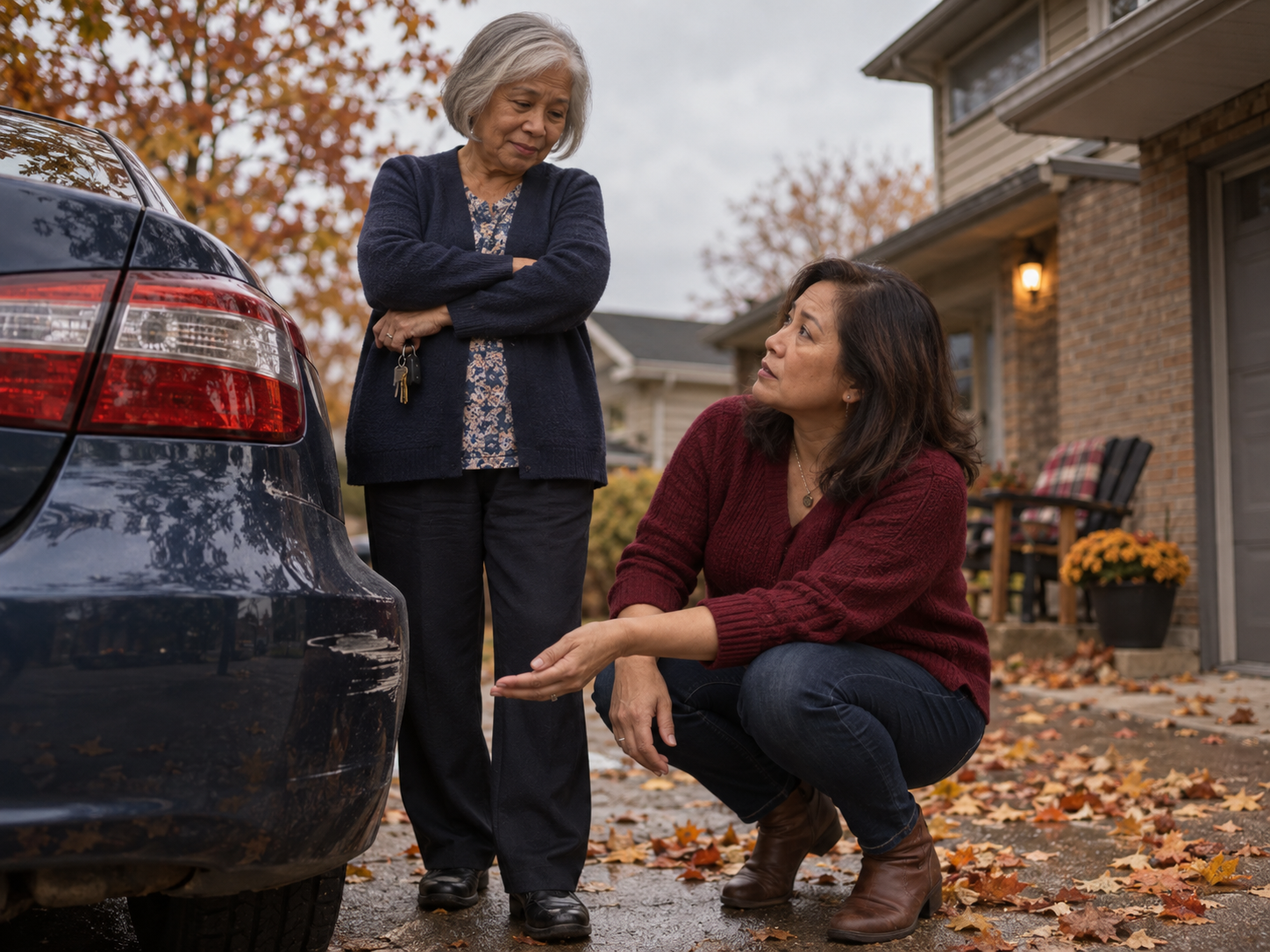
Try saying: “I saw a new scrape on the bumper. What happened there?” Instead of: “I think it’s time to stop driving.”
Try saying: “How do you find driving after dark these days?” Instead of: “You shouldn’t be on the road at night.”
Try saying: “Would you be up for a refresher course? They say it can lower your insurance.” Instead of: “We’re taking the keys.”
Notice that none of these ask anyone to quit. Most safe outcomes aren’t all-or-nothing. Giving up highways, or night driving, or long trips often buys years of independence.
The Canadian Automobile Association offers a senior driving toolkit. It was built with the Canadian Medical Association and the Canadian Association of Occupational Therapists, and it includes self-assessments your parent can do privately. That matters, because a tool feels less personal than a lecture from family.
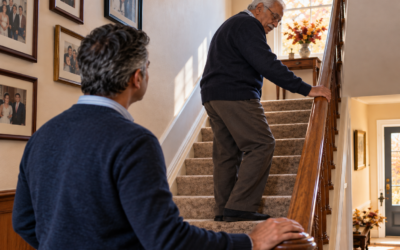
2. The Stairs and the Bathroom
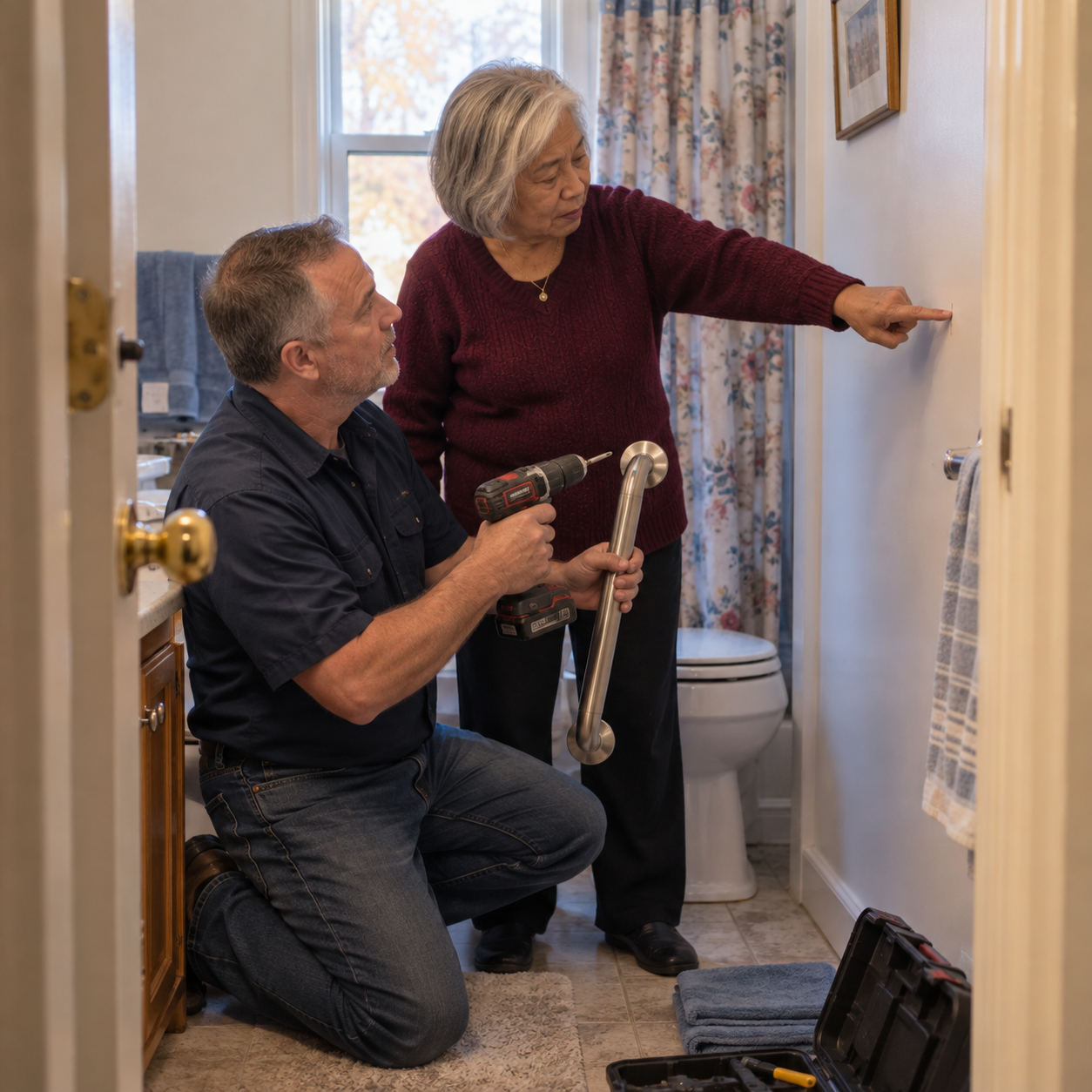
Most serious falls happen at home, and most happen in these two places.
The trick here is to blame the house, not the person. Nobody feels judged by a bad stair runner.
Try saying: “That rug slides every time I walk on it. Mind if I tack it down?” Instead of: “You’re going to trip on that.”
Try saying: “I want to put a grab bar in for when I visit. Where would it go best?” Instead of: “You need grab bars in here.”
Try saying: “This hallway is so dark at night. Can I put in a couple of motion lights?” Instead of: “You can’t see well enough to be walking around at night.”
Every one of these is an offer to fix a house. None of them is a comment on a person. That difference is the whole conversation.
3. The Medication Conversation
Pills are easier to raise than most safety topics, because the fix is usually practical rather than personal.
Try saying: “Who keeps track of all these for you?” Instead of: “Are you taking these right?”
Try saying: “Want me to sit in at your next appointment? I’ll take notes.” Instead of: “You need someone at your appointments now.”
Try saying: “Some pharmacies will sort these into blister packs for free. Want me to ask?” Instead of: “You keep forgetting your pills.”
That last one solves the problem without anyone admitting there was one. Sometimes that’s exactly what’s needed.

4. The Money and Scams Conversation
This one carries shame, which makes it the trickiest of the five. Many seniors who’ve been targeted never tell their families.
Lead with your own vulnerability, not theirs.
Try saying: “I nearly fell for a text scam last month. Have you had any weird calls?” Instead of: “Have you been giving money to anyone?”
Try saying: “Want to agree on a family password, so you know it’s really us calling?” Instead of: “Don’t send money to anyone who calls you.”
Try saying: “Would it help if a second set of eyes looked at the bills once a month?” Instead of: “I think I should take over your finances.”
Fraud is the most common crime committed against older Canadians, and the tactics keep evolving. The Canadian Anti-Fraud Centre publishes current scam alerts. Reading them together turns an awkward topic into a shared project.
5. The Nights Alone Conversation
Families often worry most about the hours when nobody’s there. So does the person living alone, though they rarely say so.
Try saying: “What happens if you need help at three in the morning?” Instead of: “You can’t keep living alone.”
Try saying: “Would it feel better if someone was here overnight while you’re healing?” Instead of: “We think you need someone in the house.”
Try saying: “What would make the nights feel easier?” Instead of: “We’re going to get someone to stay with you.”
That last question is worth asking on its own. The answer is often smaller and more specific than families expect.
What Families Can Do
Pick one, not five
You’ve probably got a list. Resist it.
Raising five concerns at once tells someone their whole life is under review. Raising one tells them you noticed one thing.
Start with whatever poses the most immediate risk. The rest can wait a month.
Trade the rule for a workaround
Almost every safety problem has a middle option between “carry on as normal” and “stop completely.”
Stop driving at night rather than stop driving. Blister packs rather than a caregiver managing medications. A grab bar rather than a move.
Workarounds get accepted. Rules get resisted.
Agree on a trigger, then let it go
Some conversations won’t land the first time. That’s fine, as long as you leave something behind.
Try this: “Okay. But if you have another fall, can we revisit this together?”
Now there’s a shared marker instead of an argument on repeat.
Then actually drop it. Nagging costs you the next conversation.
How Professional Support Helps
Sometimes a parent will accept from a professional what they’d refuse from their own children.
Our personal health care team supports the moments families worry about most. That means bathing, dressing, and moving safely around the home. Caregivers are trained in safe transfers, so the bathroom stops being the highest-risk room in the house.
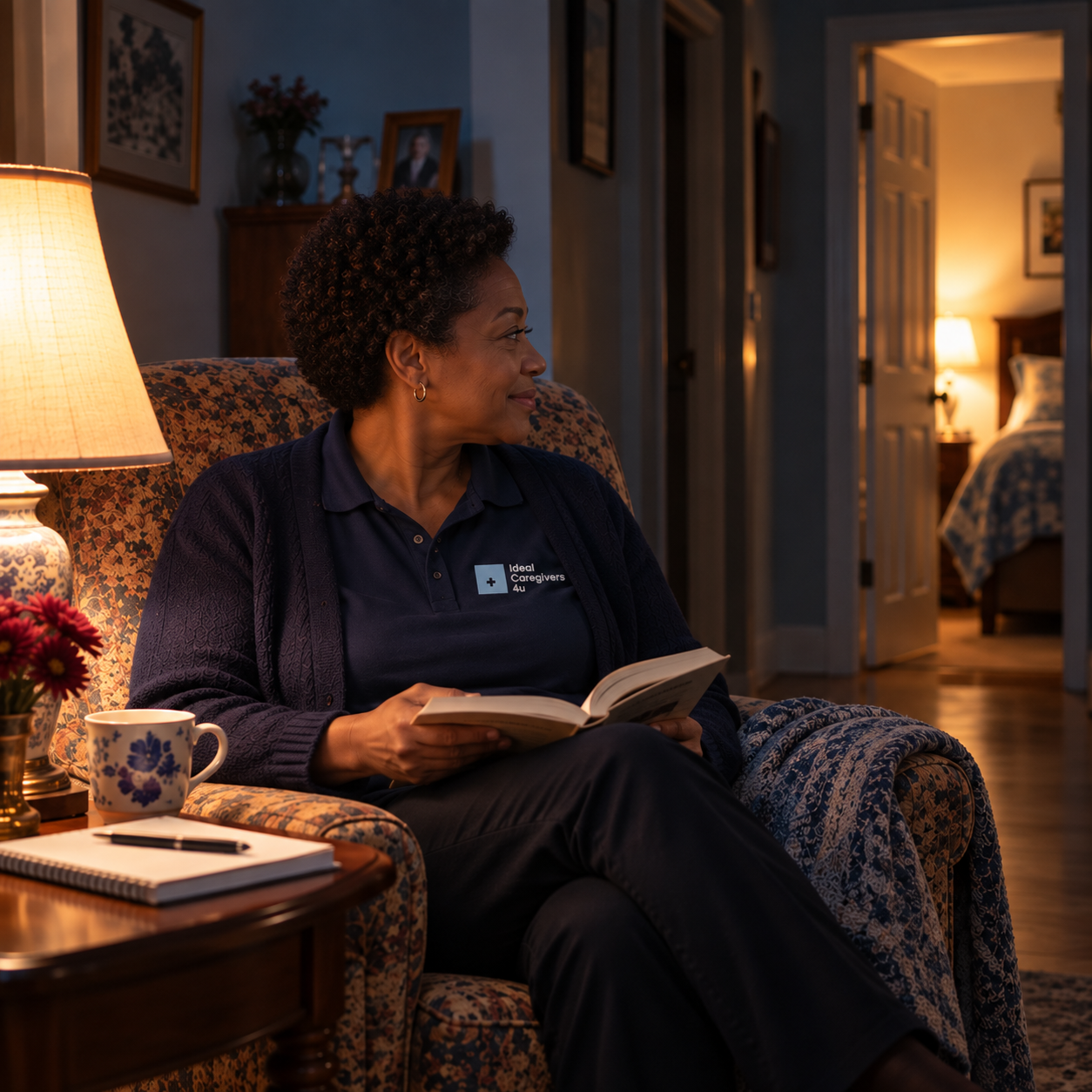
For families whose real fear is the overnight hours, awake overnight care puts someone in the home overnight. That person stays alert all night. It’s often the shortest route to everyone sleeping again, including you.
We can also start small. A few hours a week is a legitimate beginning. It’s also far easier to say yes to than a permanent arrangement.
Scripts You Can Take With You
Our free October booklet is called Around the Table: Noticing Changes and Starting the Care Conversation. Inside is a full page of conversation starters.
Print it and keep it in the car. Pick one line before you go in. Having a sentence ready is often the difference between raising something and driving home with it still unsaid.
Frequently Asked Questions
What if my parent refuses to talk about any of this?
Don’t push in the moment. Instead, ask for a trigger. Something like, “If you have another fall, can we look at this together?” That keeps the door open without a fight.
Should I bring up safety concerns in front of the whole family?
No. Group conversations feel like an intervention. Raise it one-on-one first, and involve others only once your parent knows it’s coming.
Can Ideal Caregivers 4u help with overnight care?
Yes. Awake overnight care is available in Ottawa, Mississauga, Markham, Pickering-Ajax, Oshawa-Whitby, and Edmonton. A caregiver stays awake and alert through the night.
Not Sure How to Start?
Most families call us with the conversation still ahead of them. That’s a fine place to begin.
We’ll help you think through what to raise first and how to frame it. No pressure, no cost, and no obligation to book anything.
Call 1-866-372-0603 and we’ll talk it through.
Every family’s situation is unique, but no one should have to navigate senior care alone. Ideal Caregivers 4U provides personalized, non-medical in-home support that helps seniors remain safe, comfortable, and independent at home while giving families true peace of mind.
Learn how we can help by calling 1-866-372-0603 or clicking the link below: