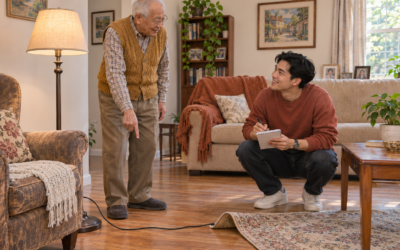

It’s 3:07 a.m. Your father gets up for the bathroom. Halfway down the hall, the floor seems to tilt. He reaches for the wall and makes it back to bed.
In the morning, he blames it on standing up too fast. Maybe that’s all it was. Or maybe his blood sugar dropped overnight.
This week, we’re doing something a little different. We sat down with Jasmine Hunt, RPN, our Clinical Supervisor in Ottawa. Then we asked her the questions families ask most about blood sugar and falls. Here’s what she shared.

First, Meet Jasmine
Jasmine is a Registered Practical Nurse and the clinical lead for our Ottawa team. She does in-home assessments, updates care plans, and visits clients and caregivers every month. She also runs our A1C and blood sugar screening at retirement residences and community events around Ottawa.
In other words, she sees the link between blood sugar and balance up close, week after week.
“Why would blood sugar make someone fall?”
When blood sugar drops too low, the brain runs short on fuel. As a result, a person can feel dizzy, shaky, weak, or confused, sometimes within minutes.
“Families picture a fall as a trip over a rug. But sometimes the trip starts inside the body. A low can make someone unsteady before they’ve taken a single step.” — Jasmine Hunt, RPN
There’s a longer-term link too. Over time, diabetes can affect the nerves in the feet and change eyesight. Both make it harder to sense the floor and judge a step.
“Why is nighttime the riskiest time?”
Lows often happen overnight, while someone is asleep. Then they get up in the dark, half-awake, and walk to the bathroom.
That’s a lot to ask of a body that’s running low on fuel. On top of that, some older adults don’t feel the early signs of a low as clearly anymore. So the first sign might be the dizziness itself.
“Which medications should families ask about?”
This is one of Jasmine’s most important tips. Insulin and an older group of diabetes pills called sulfonylureas are the medications most likely to cause lows. Meanwhile, some blood pressure pills can add to lightheadedness when standing.
None of this means anyone should stop a medication on their own. Instead, ask the doctor or pharmacist to look at the full list. Canada’s Deprescribing Network has helpful resources on reviewing diabetes medications as people age.
“Treatment that was right at age 65 isn’t always right at 85. It’s worth asking the question.” — Jasmine Hunt, RPN

“What does an A1C test actually tell us?”
An A1C test shows a person’s average blood sugar over the past two to three months. A daily meter reading is a snapshot. In contrast, the A1C is the bigger picture.
Here’s what surprises many families: lower isn’t always better for older adults. For some seniors, especially those who are frailer, doctors may aim for a slightly higher A1C on purpose. That’s because very tight control can raise the risk of lows, and lows can lead to falls. Choosing Wisely Canada encourages families and clinicians to talk about the right “sweet spot” for each person.
In Ottawa, Jasmine offers quick A1C screening with a simple finger-prick test. Results are ready in minutes, and she walks you through what they mean. It’s a helpful starting point for a conversation with your loved one’s doctor.
“What can families do tonight?”
Ask about nighttime lows
At the next appointment, ask the doctor or pharmacist a direct question. “Could any of these medications cause low blood sugar, especially overnight?” Bring a short log of readings and any dizzy spells. That way, the care team has something concrete to work with.
Keep fast sugar close
Put juice or glucose tablets on the bedside table, as the care team recommends. Keep some in a coat pocket for outings too. When a low hits, the fix needs to be within reach, not down a flight of stairs.
Slow the stand-up
Encourage a short pause before standing. Sit on the edge of the bed, feet flat, and count to ten. Then stand while holding something sturdy. This small habit helps with dizziness from any cause. That includes blood sugar, blood pressure, or simply getting up too fast.

“Where does professional support come in?”
Some families simply can’t be there at 3 a.m. That’s exactly what our Awake Overnight Care is for. A caregiver stays awake all night, helps with bathroom trips, and watches for signs of a low. Families get to sleep, too.
During the day, our Clinical Nursing Services add clinical support. That includes health monitoring and help preparing questions for a medication review.
For Ottawa clients, Jasmine also visits every month to check in with both the client and their caregiver. If she notices a pattern, like more dizzy mornings or a change in appetite, she flags it early. Afterward, the family receives a written summary of each visit.
More in Our Free Guide
Blood sugar and balance is the heart of our November series. Our free guide covers it in more detail, along with five other topics.
Download it here: Staying Steady: Balance, Blood Sugar, and Safety for Seniors This Winter.

Quick Answers
Can low blood sugar cause a fall?
Yes. Low blood sugar can cause dizziness, weakness, and confusion. Each of these raises the chance of losing balance, especially at night.
Is a lower A1C always better for seniors?
Not always. For some older adults, doctors aim a little higher to reduce the risk of lows. Ask the care team what target fits your loved one.
Do you offer overnight care and nursing support near me?
Yes. We provide Awake Overnight Care and nursing support in Ottawa, Mississauga, Markham, Pickering-Ajax, Oshawa-Whitby, and Edmonton.
Have a Question for Our Team?
Whether it’s about overnight care, a medication worry, or booking an A1C screening in Ottawa, we’re happy to help.
Call us at 1-866-372-0603. It’s a friendly conversation, with no pressure.
Every family’s situation is unique, but no one should have to navigate senior care alone. Ideal Caregivers 4U provides personalized, non-medical in-home support that helps seniors remain safe, comfortable, and independent at home while giving families true peace of mind.
Learn how we can help by calling 1-866-372-0603 or clicking the link below: