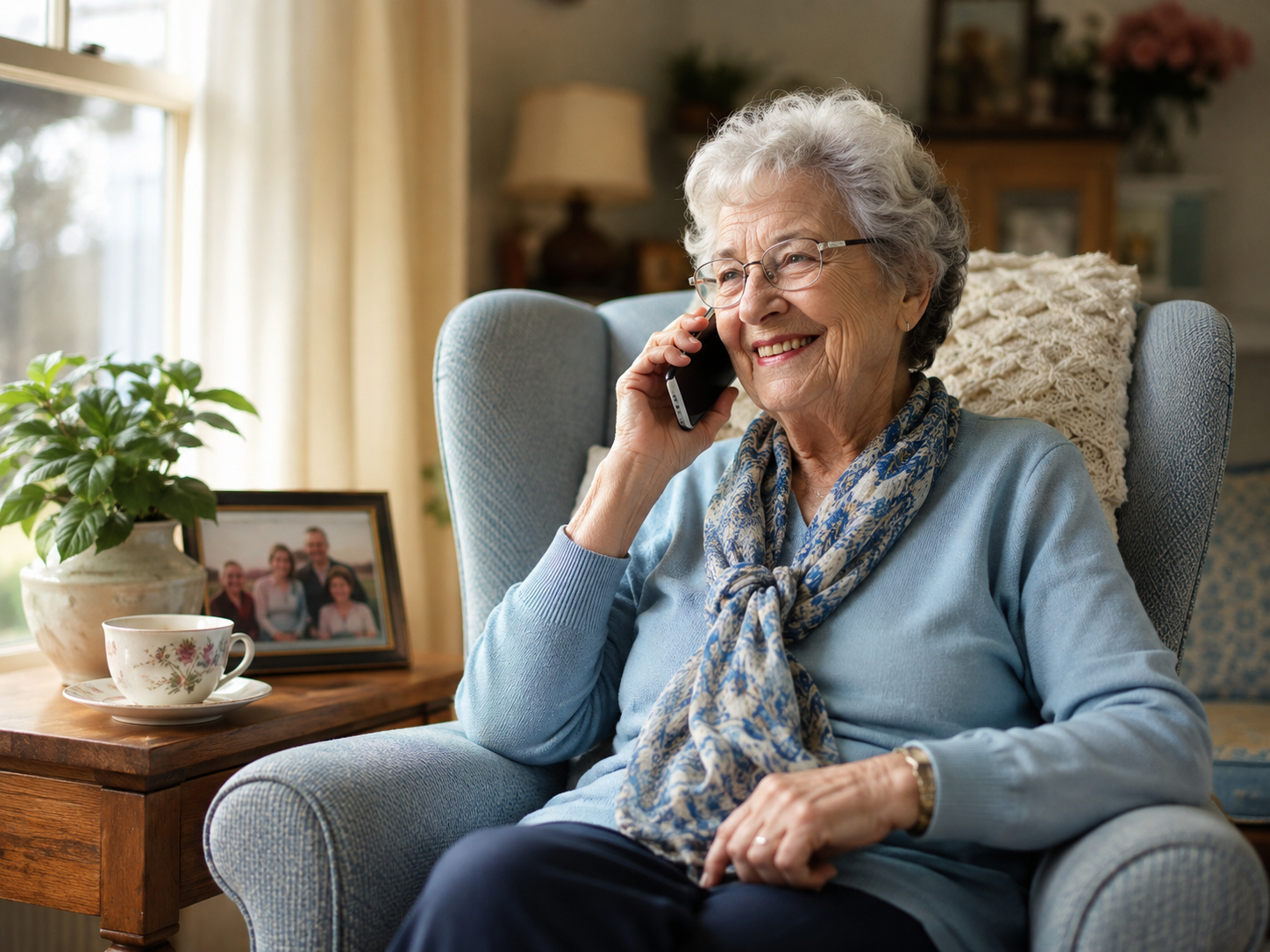
A daughter calls her mother every Sunday evening. It’s a small thing — twenty minutes, give or take. Yet her mother mentions that call to the neighbours, plans her evening around it, and feels its absence keenly on the rare week it’s missed.
That’s the quiet power of rhythm. Senior social connection isn’t built on grand gestures or constant contact. It’s built on predictable, reliable moments that give the week a shape and something to look forward to.
This week, as part of our August series on keeping seniors active, engaged, and connected, we’re looking at how families can build that rhythm — and why it matters more than most people realize.

Why Connection Is a Health Issue, Not Just a Nice-to-Have
Loneliness feels like an emotional problem. In truth, it’s a physical one too.
According to Statistics Canada, almost one in five Canadian seniors aged 65 and older reported experiencing loneliness, with senior women more likely to feel lonely than senior men. Research links chronic social isolation in older adults to higher rates of heart disease, depression, and cognitive decline — and those who report barriers to joining social activities are nearly three times as likely to be lonely as those without such barriers.
The encouraging news sits on the other side of that same coin. Seniors with regular, meaningful contact tend to stay healthier, recover from illness faster, and simply feel happier. Connection isn’t a luxury layered on top of good care. It’s part of what good care means.
The Building Blocks of Connection
Strong social connection tends to rest on a few reliable supports rather than one big effort.
A predictable rhythm
Predictable contact beats sporadic contact every time. A Sunday dinner, a Wednesday phone call, a good-morning text each day — these give seniors something to anticipate and rely on. Better still, spreading contact across several family members keeps any one person from carrying it all, and gives your loved one a wider web of connection.
A link to the wider community
Family matters enormously, but it’s rarely enough on its own. Seniors’ centres, faith communities, libraries, and local programs offer connection that family can’t replicate. Often the hardest part is simply the first visit, so offer to go along the first time. Once a familiar face or two appears, momentum tends to build on its own.
A bridge across distance
When family lives far away, technology closes the gap. A simple tablet, set up with large icons and a little patient coaching, can bring distant grandchildren right into the living room. Video calls, shared photo streams, and even remote check-in tools help seniors feel held in mind between visits rather than out of sight.

What Families Can Do
Start with one anchor
Choose a single recurring moment and protect it fiercely. One reliable weekly call your loved one can count on does more for connection than good intentions scattered across the month. Once that anchor holds, add a second.
Widen the circle
Connection shouldn’t rest on one relationship alone. Invite grandchildren to send voice notes, ask a neighbour to drop by, or arrange rides to a community program. A varied social diet is more resilient than a single thread — and it protects your loved one if one source of contact pauses.
Watch for quiet withdrawal
Declining invitations, letting hobbies lapse, or going quiet on the phone can be early signs of isolation creeping in. Noticing early makes all the difference. Sometimes a gentle nudge is enough; other times it signals a need for more regular companionship than family alone can provide.
Get the Complete Picture
Social connection is the third of six pillars in our free August resource, The Complete Guide to Keeping Seniors Active, Engaged, and Connected. It covers physical activity, cognitive engagement, connection, purpose, creativity, and a full year of activity ideas — plus a simple weekly engagement checklist families can start using right away. Download your copy and follow along all month.
Frequently Asked Questions
How much social contact does a senior really need? There’s no single number, but daily contact of some kind — even a brief call or text — makes a measurable difference. Consistency matters more than duration.
What are the signs my loved one might be socially isolated? Watch for withdrawal from activities they once enjoyed, declining invitations, low mood, or going quiet during calls. These often appear gradually, so noticing changes early helps.
Can a companion caregiver help with social connection? Yes — it’s one of our most requested services. Ideal Caregivers 4U companion caregivers in Ottawa, Mississauga, Edmonton, Markham, Pickering-Ajax, and Oshawa-Whitby provide regular conversation, shared activities, and genuine friendship on a reliable schedule.
Every family’s situation is unique, but no one should have to navigate senior care alone. Ideal Caregivers 4U provides personalized, non-medical in-home support that helps seniors remain safe, comfortable, and independent at home while giving families true peace of mind.
Learn how we can help by clicking the link below or calling us at
1-866-372-0603