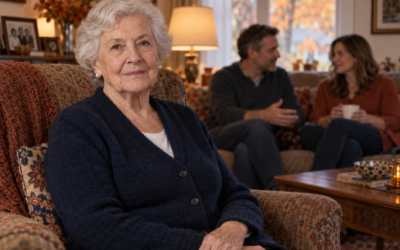

Most families land on the same solution. Mum seems a little foggier lately, so someone picks up a book of crossword puzzles on the way over. It’s a kind gesture, and puzzles genuinely help.
However, the crossword book often ends up half-finished on the side table. Meanwhile, the real opportunity gets missed — because senior brain health depends far less on any single activity than on variety, novelty, and curiosity woven through ordinary days.
This week, as part of our August series on keeping seniors active, engaged, and connected, we’re looking at what actually keeps an aging mind sharp.
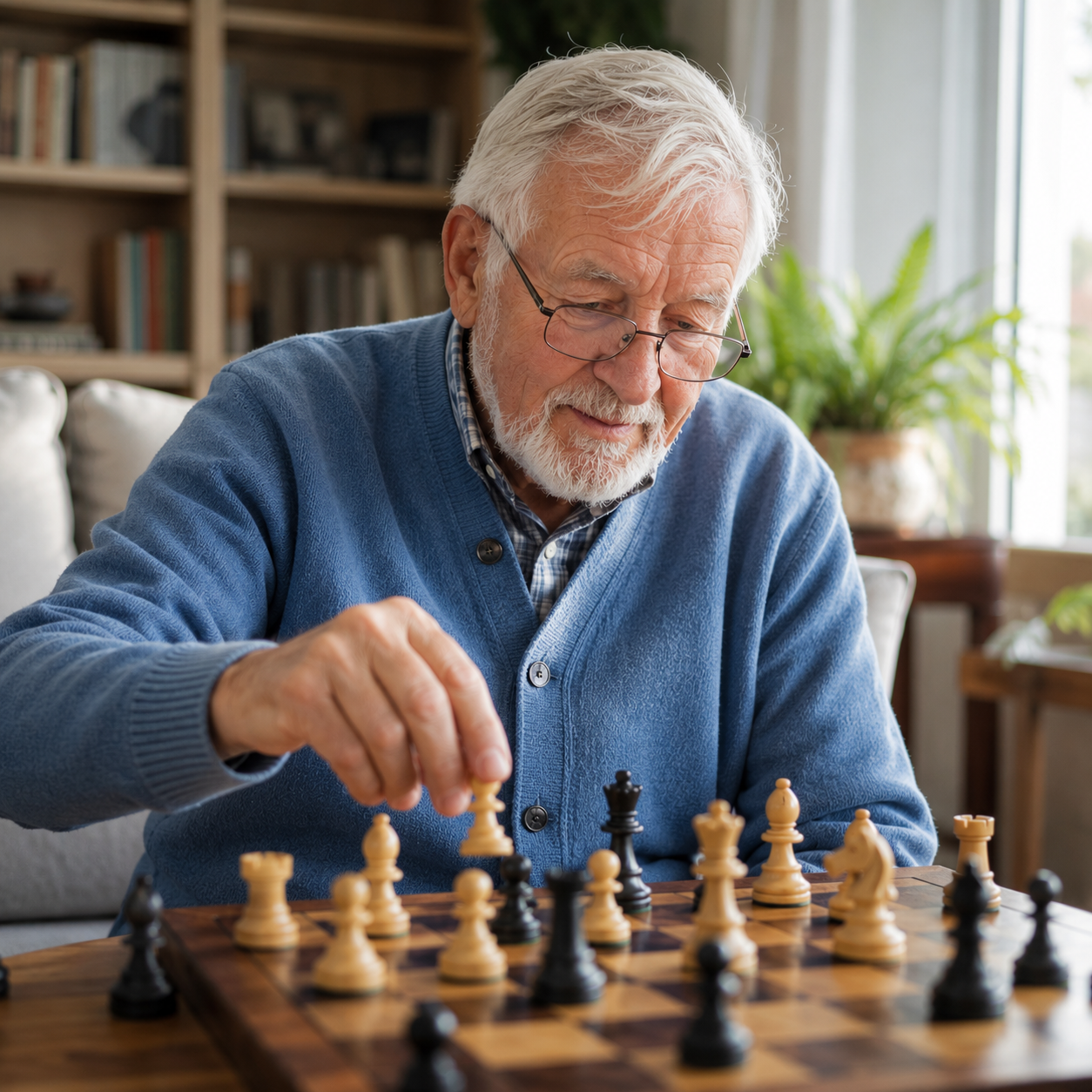
Why the Brain Needs Challenge, Not Just Routine
The brain works a lot like a muscle. Use it in demanding, varied ways and it stays strong. Let it coast through the same undemanding routine every day and its abilities slowly narrow.
The Alzheimer Society of Canada lists challenging your brain among its evidence-based recommendations for lifelong brain health, alongside staying physically active and socially connected. Importantly, mental engagement doesn’t prevent every form of decline, and it isn’t a cure for dementia. Yet seniors who regularly stretch their thinking tend to hold onto memory, attention, and problem-solving skills longer — and they report greater confidence along the way.
Here’s the part families often miss. A crossword completed every morning for fifteen years stops being a challenge. It becomes a habit. Real cognitive engagement asks the brain to do something it hasn’t quite done before.
What Cognitive Engagement Actually Looks Like
Four ingredients turn ordinary activities into genuine mental exercise.
Novelty
New experiences build new neural pathways. Learning a few phrases in another language, trying an unfamiliar recipe, exploring a new walking route, or figuring out a feature on a smartphone all qualify. The subject barely matters. Newness is the active ingredient.
Variety
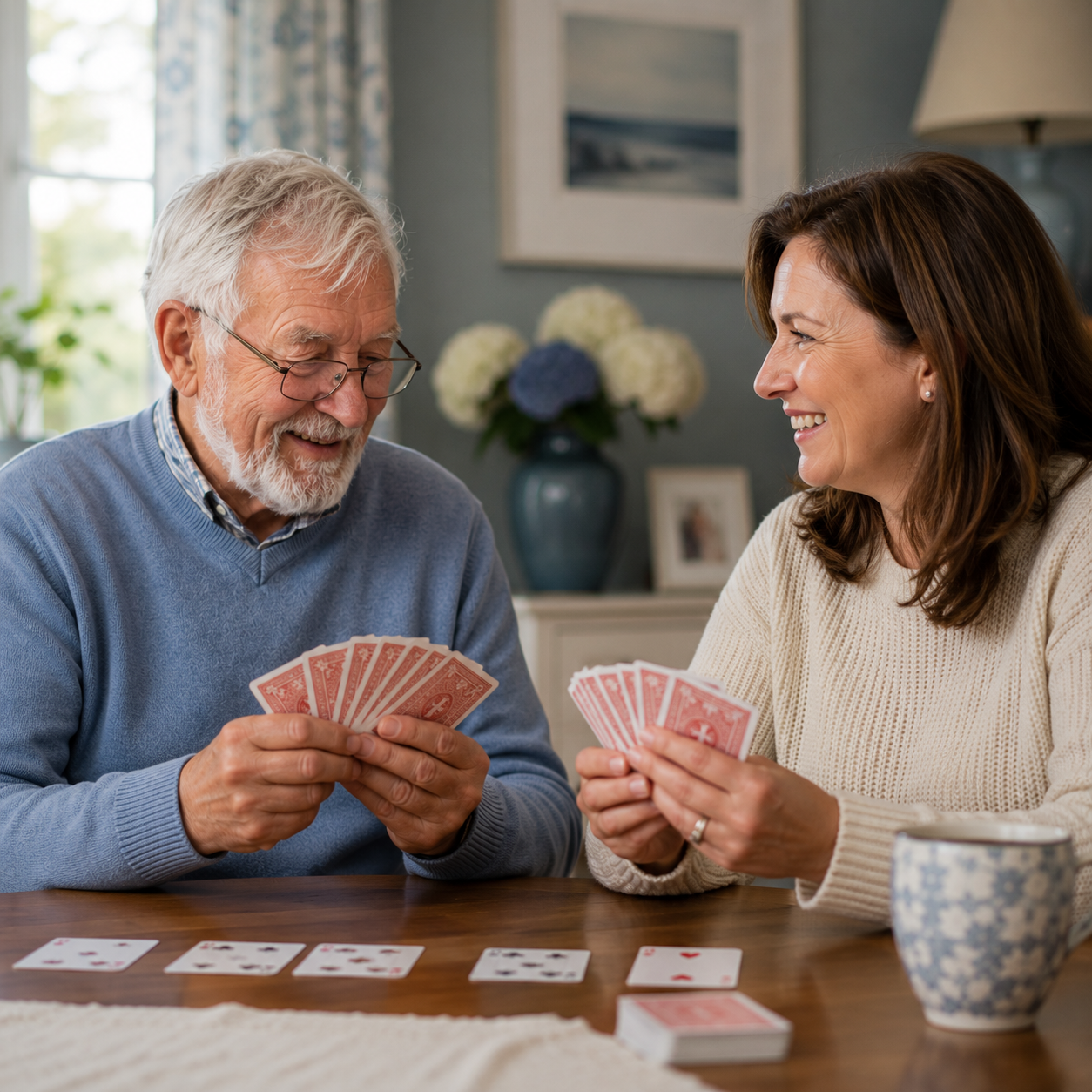
Different activities work different mental muscles. Crosswords exercise language and recall, sudoku targets logic, jigsaw puzzles engage spatial reasoning, and card games demand strategy plus memory. Rotating between them keeps more of the brain involved than repeating any one favourite.
Memory and recall
Reminiscing is real cognitive work. Looking through old photographs, retelling family stories, or naming everyone in a wedding picture activates memory in ways that feel effortless and enjoyable. Music does something similar, often reaching memories that conversation can’t.
Conversation
Genuine back-and-forth conversation may be the most underrated brain workout available. Listening, forming opinions, recalling details, and responding in real time engage several thinking skills at once. Consequently, a senior who talks with someone daily gets far more mental exercise than one who fills the same hour alone with television.
What Families Can Do
Rotate, don’t repeat
Keep three or four different activities in circulation rather than one on repeat. A puzzle this week, a card game next, a documentary and a conversation about it after. Variety does the heavy lifting here.
Learn something together
Shared learning removes the pressure of “being tested.” Take an online class together, work through a recipe neither of you has tried, or start a two-person book club with a chapter a week. Company makes new challenges feel like fun rather than assessment.
Build engagement into the daily routine
Anchor mental activity to something that already happens. A crossword clue with morning coffee, music during lunch preparation, a phone call after the evening news. Furthermore, routines like these survive busy weeks far better than plans that depend on someone remembering.
Get the Complete Picture
Cognitive engagement is the second of six pillars in our free August resource, The Complete Guide to Keeping Seniors Active, Engaged, and Connected. Inside, you’ll find practical guidance on movement, mental stimulation, social connection, purpose, creativity, and a full year of activity ideas — plus a simple weekly engagement checklist for families. Download your copy and follow along all month.
Frequently Asked Questions
Do brain games and puzzles really improve memory in seniors? Puzzles help, especially when varied and genuinely challenging. However, they work best alongside physical activity, social connection, and new learning rather than on their own.
How can I encourage a parent who says they’re “not a puzzle person”? Start from their interests instead. Music, cooking, storytelling, card games, gardening, and lively conversation all provide real mental exercise without a puzzle book in sight.
Can a caregiver provide mental stimulation during visits? Yes. Ideal Caregivers 4U companion caregivers in Ottawa, Mississauga, Edmonton, Markham, Pickering-Ajax, Oshawa-Whitby, and Kingston bring games, puzzles, music, and daily conversation into the home, using our monthly Senior Activity Booklet for fresh ideas.
Every family’s situation is unique, but no one should have to navigate senior care alone. Ideal Caregivers 4U provides personalized, non-medical in-home support that helps seniors remain safe, comfortable, and independent at home while giving families true peace of mind. Learn how we can help by clicking the link below or by calling 1-866-372-0603