

Your mother insists she sleeps fine. But you’ve noticed she’s slower to follow conversations lately. She repeats herself more. She seems foggy in the mornings and exhausted by mid-afternoon.
Sleep problems in older adults are easy to overlook — and even easier to dismiss as a normal part of aging. They aren’t. Poor sleep has direct, measurable consequences for cognitive health, physical safety, and emotional wellbeing. And in many cases, the underlying causes are treatable.
This week we’re looking at what’s really happening when seniors don’t sleep well — and what families can do about it.

Why Sleep Changes With Age
Sleep does change as we get older. That part is true. But changing doesn’t mean deteriorating without cause.
Older adults naturally shift toward earlier sleep and wake times. They spend less time in deep, restorative sleep stages and more time in lighter stages. They wake more frequently during the night. These shifts are real — but they don’t fully explain the level of sleep disruption many seniors experience.
Several factors actively worsen sleep quality in older adults. Chronic pain, frequent nighttime urination, medications, anxiety, depression, and underlying sleep disorders all play a role. So does reduced exposure to natural light — a key regulator of the body’s internal clock that many homebound seniors simply don’t get enough of.
Understanding the cause matters, because the right solution depends entirely on what’s driving the problem.
The Cognitive Cost of Poor Sleep
Sleep is when the brain consolidates memories, clears metabolic waste, and repairs itself. Disrupting that process has consequences that go well beyond feeling tired.
Research increasingly links chronic sleep problems in older adults to a significantly higher risk of cognitive decline. The Alzheimer Society of Canada notes that poor sleep is associated with the buildup of amyloid plaques — a hallmark of Alzheimer’s disease. This doesn’t mean poor sleep causes dementia. It means the relationship is real, significant, and worth taking seriously.
Short-term, the effects are equally concerning. Poor sleep impairs attention, slows processing speed, and disrupts working memory. A senior who slept poorly is less sharp, less safe, and less emotionally regulated the next day. Over time, these daily deficits add up.
Sleep Problems and Physical Safety
The physical risks of poor sleep are just as serious as the cognitive ones.
Sleep deprivation increases fall risk significantly. It slows reaction time, impairs balance, and reduces the ability to recover from a misstep. As we discussed in our blog on overlooked fall hazards for seniors at home, fall prevention requires looking at the whole picture — and sleep is part of that picture.
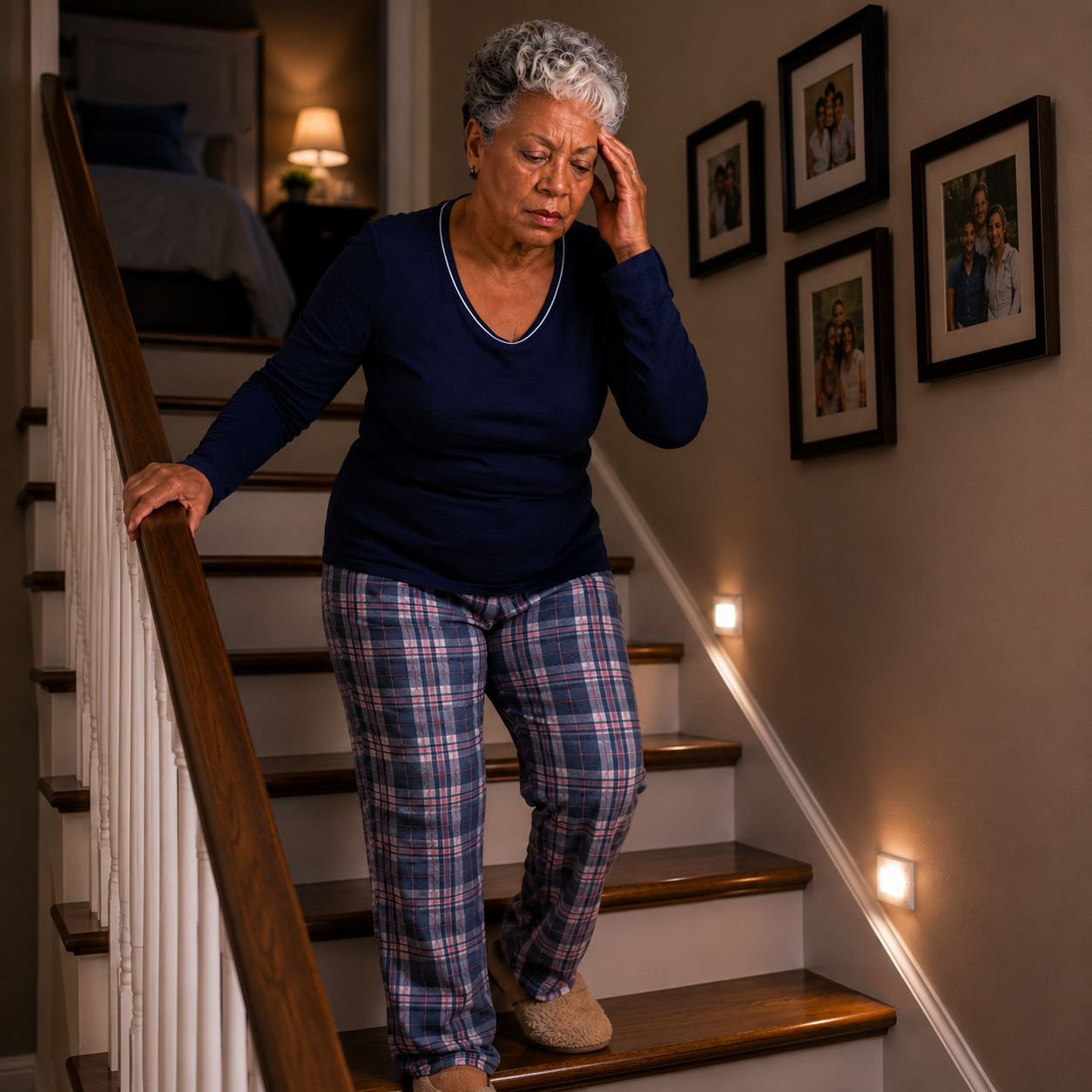
Poor sleep also weakens immune function, raises blood pressure, disrupts blood sugar regulation, and increases inflammation. For seniors already managing chronic conditions, these effects compound existing health challenges quickly.
Common Sleep Problems in Older Adults
Insomnia Difficulty falling asleep, staying asleep, or waking too early — and feeling unrefreshed as a result. Insomnia is the most common sleep problem in older adults. It often has identifiable causes including anxiety, pain, medication side effects, and poor sleep habits that have developed over years.
Sleep Apnea Repeated interruptions in breathing during sleep, often accompanied by snoring and gasping. Sleep apnea is significantly underdiagnosed in older adults — particularly women. It fragments sleep severely and carries serious cardiovascular risks. A sleep study can confirm the diagnosis, and treatment is highly effective.
Restless Legs Syndrome An uncomfortable urge to move the legs, typically worse in the evening and at night. It disrupts the ability to fall asleep and stay asleep. It responds well to treatment once identified.
Circadian Rhythm Disruption The internal body clock shifts with age, but illness, reduced light exposure, and irregular routines can disrupt it further. Seniors who nap frequently during the day or have limited outdoor time are particularly susceptible.
Medication-Related Sleep Disruption As we explored in our blog on senior medication safety at home, many common medications — including some blood pressure drugs, diuretics, and corticosteroids — directly interfere with sleep. A medication review is always worth considering when sleep problems emerge.
Signs That Sleep May Be a Problem
Families should watch for these indicators that sleep problems in older adults may be affecting their loved one:

None of these signals should be accepted without investigation. Each one deserves a conversation with their doctor.
What Families Can Do: Building Better Sleep Habits
Good sleep habits — often called sleep hygiene — make a genuine difference. These aren’t complicated changes, but they require consistency to work.
Protect a consistent schedule The body clock responds to regularity. Waking and sleeping at consistent times — even on weekends — strengthens the natural sleep-wake cycle. Irregular schedules undermine it quickly.
Limit daytime napping Short naps of 20 to 30 minutes in the early afternoon are generally fine. Long or late naps reduce the drive to sleep at night and fragment the overall sleep pattern.
Increase daytime light exposure Natural light is the most powerful regulator of the internal clock. Encourage morning outdoor time — even a short walk or time on a porch makes a difference. For homebound seniors, a light therapy lamp used in the morning is a practical alternative.
Review the bedroom environment The bedroom should be cool, dark, and quiet. Remove televisions if possible — screen light and stimulating content both interfere with sleep onset. A white noise machine can help mask disruptive sounds.
Address pain proactively Uncontrolled pain is a leading cause of nighttime waking. Talk to their doctor about whether pain management could be optimized to support better sleep.
What Families Can Do: When to Seek Help
Better sleep habits help — but they don’t address everything. These situations warrant a conversation with a doctor:
- Sleep problems that persist despite consistent habit changes
- Witnessed breathing pauses or severe snoring suggesting sleep apnea
- Restless legs symptoms that consistently disrupt sleep onset
- Sleep disruption that appears linked to a specific medication
- Cognitive changes that seem connected to poor sleep
A doctor can refer for a sleep study, review medications, or recommend evidence-based treatments like Cognitive Behavioural Therapy for Insomnia — an effective, non-medication approach that works particularly well in older adults.
The Role of Routine and Connection in Senior Sleep Health
Routine and social engagement both support healthy sleep — and both are areas where in-home support makes a real difference.
Seniors with structured daily routines sleep better than those whose days lack shape and rhythm. Regular mealtimes, consistent activity, and meaningful social interaction all reinforce the body clock and reduce the anxiety that contributes to insomnia.
A companion caregiver helps build and maintain exactly that kind of daily structure. Regular visits create anchor points in the day — shared meals, conversation, light activity, and engagement — that support the routines good sleep depends on.
For families navigating sleep challenges alongside broader care concerns, our Complete Guide to Helping Your Senior Loved One Thrive at Home covers sleep as one of the four core pillars of senior wellness — alongside physical health, mental wellbeing, and nutrition. It’s a practical resource worth downloading and sharing with your family.
Supporting the Whole Person
Sleep problems rarely exist in isolation. They intersect with cognitive health, physical safety, emotional wellbeing, and medication management. Addressing them well means looking at the whole picture — not just the hours spent in bed.
If you’re concerned about a senior loved one’s sleep or overall wellbeing, our team at Ideal Caregivers 4U is here to help. We provide in-home care services designed to support seniors across Ottawa, Kingston, and the Greater Toronto Area.

📞 Call us at 1-866-372-0603 or visit idealcaregivers4u.com/services to learn how we can help your family find the right level of support.
Frequently Asked Questions
Why do older adults have more sleep problems than younger people? Sleep naturally changes with age — older adults spend less time in deep sleep, wake more frequently, and shift toward earlier sleep and wake times. Beyond normal aging, chronic pain, medications, anxiety, reduced light exposure, and undiagnosed sleep disorders all actively worsen sleep quality in older adults. Most sleep problems have identifiable and treatable causes.
What is the connection between sleep and dementia risk in seniors? The Alzheimer Society of Canada notes that poor sleep is associated with the buildup of amyloid plaques linked to Alzheimer’s disease. Chronic sleep disruption also impairs the brain’s ability to clear metabolic waste during sleep — a process now understood to be important in reducing dementia risk. While poor sleep doesn’t directly cause dementia, the relationship is significant and worth addressing proactively.
What are the most common sleep disorders in older adults? The most common sleep problems in older adults include insomnia, sleep apnea, restless legs syndrome, and circadian rhythm disruption. Each has different causes and responds to different treatments. A doctor’s assessment is the right starting point for identifying which is present and what approach is most appropriate.
How can families help a senior loved one sleep better at home? Families can encourage consistent sleep and wake times, limit long daytime naps, increase morning light exposure, create a cool and quiet bedroom environment, and address uncontrolled pain. If these changes don’t help or if symptoms suggest sleep apnea or another disorder, a conversation with their doctor is the right next step.
Can in-home care help with sleep problems in older adults? Yes — in an important indirect way. Consistent daily routines, regular social engagement, and structured mealtimes all support healthy sleep patterns. A companion caregiver from Ideal Caregivers 4U helps seniors in Ottawa, Mississauga, Edmonton, Markham, Pickering-Ajax, Oshawa-Whitby, and Kingston maintain the kind of daily rhythm that good sleep depends on. Call us at 1-866-372-0603 to learn more.
Every family’s situation is unique, but no one should have to navigate senior care alone. Ideal Caregivers 4U provides personalized, non-medical in-home support that helps seniors remain safe, comfortable, and independent at home while giving families true peace of mind.
Learn how we can help by clicking the link below or calling us at
1-866-372-0603