Imagine knowing exactly what you want to say — and not being able to say it. The words are there, somewhere, but they won’t come out right. Or they come out jumbled. Or they don’t come at all. And the person across from you is waiting, trying to help, but somehow making it harder.
This is the daily reality for many stroke survivors living with aphasia. And for the family members trying to reach them, it can feel just as isolating.
June is Aphasia Awareness Month — and it’s a condition that deserves far more attention than it gets. An estimated 100,000 Canadians are living with aphasia, yet many families have never heard the word before their loved one’s stroke. The Aphasia Institute, based in Toronto, is Canada’s leading resource for aphasia support, education, and therapy — a valuable first stop for any family navigating this diagnosis. This post is for those families — the ones learning a new way to connect with someone they love.
What Aphasia Actually Is
Aphasia is a communication disorder caused by damage to the language areas of the brain — most commonly as a result of stroke. It affects a person’s ability to speak, understand spoken language, read, and write, in varying combinations and degrees.
Here is the most important thing to understand about aphasia: it does not affect intelligence. A person with aphasia has the same thoughts, memories, opinions, and personality they always had. They simply have a harder time expressing them — or taking in what others are expressing. The connection between thought and language has been disrupted. The person behind it has not changed.
This distinction matters enormously — not just for how families interact with their loved one, but for the dignity and respect that every person with aphasia deserves.
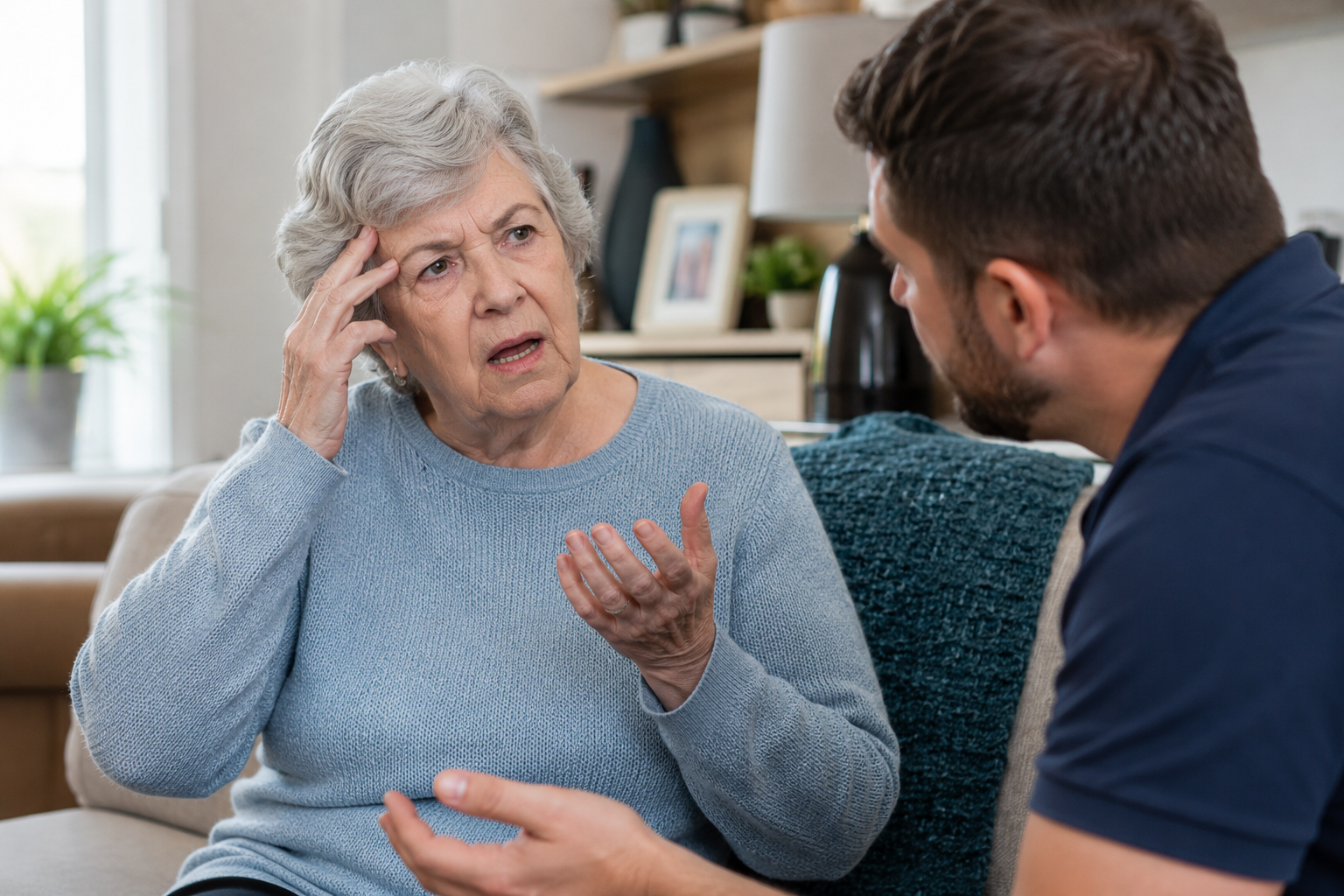
Not All Aphasia Looks the Same
Aphasia presents differently depending on where in the brain the stroke occurred. Families are often confused when their loved one’s challenges don’t match what they’ve read about, and that’s because there are several distinct types.
Broca’s aphasia (also called expressive aphasia) affects the ability to produce speech. A person with Broca’s aphasia typically understands what is said to them but struggles to get words out. Speech may come in short, effortful bursts — single words or short phrases rather than full sentences.
Wernicke’s aphasia (also called receptive aphasia) affects the ability to understand language. A person with Wernicke’s aphasia may speak fluently, but the words may not make sense — they may use incorrect words or made-up words without being aware of it. Understanding what others say is difficult.
Global aphasia is the most severe form, affecting both expression and comprehension significantly. It often occurs immediately after a major stroke and may improve over time with therapy.
Anomic aphasia is a milder form where the person can speak in sentences and understands what is said, but struggles to find specific words — particularly nouns and verbs. You may notice them talking around the word they can’t retrieve, or substituting a related word.
Knowing which type of aphasia your loved one is experiencing helps you communicate more effectively — and helps set realistic expectations for what recovery might look like.
What Recovery Looks Like
Aphasia recovery is real, and it can be significant — but it takes time, consistency, and the right support. Most recovery happens in the first few months after a stroke, but improvement can continue for years, particularly with ongoing speech-language therapy and regular communication practice at home.
Speech-language pathologists are the specialists who assess and treat aphasia. If your loved one hasn’t been connected with one yet, this is the single most important step you can take. Early intervention makes a measurable difference in outcomes.

In between therapy sessions, the communication environment at home matters enormously. A companion caregiver who visits regularly — someone patient, engaged, and consistent — can provide the kind of daily interaction that supports language recovery. Reading aloud, playing word games, looking through photo albums together — these aren’t just pleasant activities. They’re meaningful practice. Our companion caregivers at Ideal Caregivers 4U work with post-stroke clients across Ottawa, Kingston, and the Greater Toronto Area, and are matched with clients based on personality and communication needs, not just availability.
How to Communicate More Effectively
Adjusting how you communicate with someone with aphasia is one of the most practical and powerful things a family caregiver can do. These strategies won’t feel natural at first — but with practice, they become second nature.

Give more time. This is the most important adjustment most families need to make. Slow down. Allow long pauses. Resist the urge to jump in and finish the sentence — even when you think you know what they’re trying to say. The extra time isn’t uncomfortable silence; it’s the space your loved one needs to work through the language.
Simplify without talking down. Use shorter sentences and simpler words, but maintain a normal adult tone. There is a meaningful difference between simplifying your language and treating someone as though they are a child. Your loved one’s intelligence is intact — only the communication pathway is affected.
Use multiple channels. Don’t rely on words alone. Point to objects, use gestures, draw simple pictures, write key words on paper. A communication board — a simple card or binder with pictures and words representing common needs, people, and activities — can be a genuine lifesaver for day-to-day exchanges.
Ask yes or no questions. “Are you in pain?” is far easier to respond to than “How are you feeling?” When possible, structure your questions so they can be answered with a nod, a shake of the head, or a single word.
Reduce background noise. Television, radio, and competing conversations make communication significantly harder for someone with aphasia. Give the exchange your full, quiet attention. Turn off the background noise and face your loved one directly.
Be honest when you don’t understand. It can be tempting to nod along rather than ask someone to try again — it feels kinder in the moment. But pretending to understand when you don’t erodes trust and leaves your loved one feeling unheard. A kind, honest “I want to make sure I understand — can we try again?” is more respectful than a false nod.
Celebrate communication, not correctness. When your loved one successfully communicates something — even imperfectly, even with the wrong word — acknowledge it. The goal is connection, not perfect language. Keeping the interaction positive encourages more attempts.
Taking Care of the Emotional Side
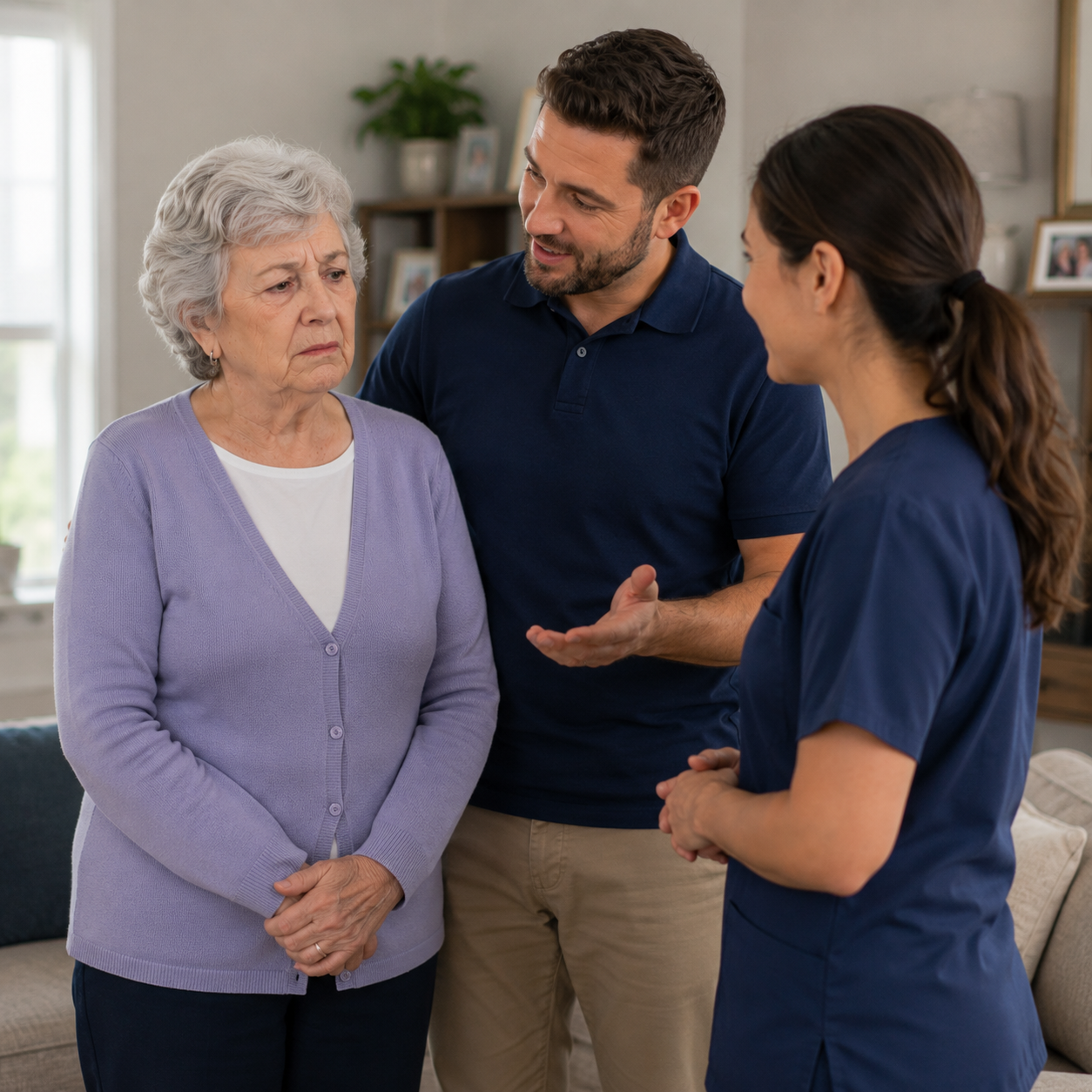
Aphasia doesn’t just affect communication. It affects identity, relationships, and quality of life in profound ways.
Many stroke survivors with aphasia experience significant depression, anxiety, and social withdrawal. The inability to express yourself to the people you love — to tell them how you feel, to participate in conversation, to make your needs known — is an enormous loss. It can lead to isolation that compounds the cognitive and emotional challenges already present after a stroke.
Families play a critical role in keeping connection alive. Regular visits, consistent routines, and activities that don’t depend entirely on verbal communication — music, looking through photos, watching a favourite show together, going for a walk — all help maintain the relationship and the person’s sense of engagement with life.
If isolation is becoming a concern, this is an area where professional companion care can make a real day-to-day difference. Having a warm, regular presence outside of the immediate family keeps social connection alive and gives primary caregivers the space they need. Ideal Caregivers 4U provides companion care for post-stroke clients in Ottawa, Mississauga, Kingston, Markham, Pickering, Ajax, Oshawa, and Whitby — call us at 1-866-372-0603 to learn more.
For the Caregiver: This Is Hard for You Too
Supporting someone with aphasia is emotionally demanding in ways that are hard to describe to someone who hasn’t experienced it. The grief of losing the easy back-and-forth of conversation. The frustration of repeated misunderstandings. The guilt that comes with feeling frustrated at all.
These feelings are normal. They don’t make you a bad caregiver — they make you a human one.
Give yourself permission to find this hard. Reach out to other caregivers who understand. And if you need time to step back and recharge, respite care exists for exactly that reason. You cannot pour from an empty cup — and your loved one needs you to be sustainable, not depleted.
For a complete picture of post-stroke caregiving — including communication strategies, mealtime safety, home modifications, and knowing when to bring in professional support — download our free guide: Caring for a Loved One After Stroke: A Family Caregiver’s Guide. It’s designed to be a resource you come back to throughout the journey.
To speak with our team about in-home care options for your family, call 1-866-372-0603 or visit idealcaregivers4u.com/services/.
Frequently Asked Questions
What is aphasia, and what causes it? Aphasia is a communication disorder that affects a person’s ability to speak, understand speech, read, and write. It is most commonly caused by stroke, when damage to the brain disrupts the areas that control language. It can also be caused by brain tumours, head injuries, or progressive neurological conditions. Aphasia does not affect intelligence — the person’s thoughts, memories, and personality remain intact. Families in Ottawa, Mississauga, Kingston, Markham, Pickering, Ajax, Oshawa, and Whitby who are supporting a loved one with aphasia after a stroke can speak with their medical team about a referral to a speech-language pathologist.
What are the different types of aphasia after a stroke? The most common types of aphasia after stroke include Broca’s aphasia (difficulty producing speech while understanding is relatively preserved), Wernicke’s aphasia (fluent speech that may not make sense, with difficulty understanding others), global aphasia (severe impairment of both expression and comprehension), and anomic aphasia (difficulty finding specific words). The type depends on the location and extent of the stroke. A speech-language pathologist can assess which type is present and recommend appropriate treatment and communication strategies.
Can aphasia improve after a stroke? Yes — aphasia recovery is possible and often significant, particularly with early and consistent speech-language therapy. Most recovery occurs in the first few months after a stroke, but improvement can continue for years. The degree of recovery varies based on the severity and location of the stroke, the person’s age and overall health, and how consistently therapy and communication practice are maintained at home. Family involvement and a supportive communication environment play an important role in recovery.
How should I communicate with someone who has aphasia? Key strategies include slowing down and giving more time to respond, simplifying sentences without talking down, using gestures, pictures, and written words to support verbal communication, asking yes/no questions when possible, reducing background noise, and being honest when you don’t understand rather than pretending to follow along. A communication board with common words and images can be a helpful tool for daily exchanges. A speech-language pathologist can provide personalized communication strategies based on the specific type and severity of aphasia.
How can in-home care help someone with aphasia after a stroke? In-home companion care can make a meaningful difference for stroke survivors living with aphasia by providing regular social interaction, patient communication support, and engagement in activities that support language recovery — such as reading aloud, word games, and conversation practice. Companion caregivers also help prevent the isolation that commonly accompanies aphasia. Ideal Caregivers 4U provides companion care and PSW services for post-stroke clients, including those living with aphasia, across Ottawa, Mississauga, Kingston, Markham, Pickering, Ajax, Oshawa, and Whitby. Call 1-866-372-0603 to learn more.
Every family’s situation is unique, but no one should have to navigate senior care alone. Ideal Caregivers 4U provides personalized, non-medical in-home support that helps seniors remain safe, comfortable, and independent at home while giving families true peace of mind.
Learn how we can help by clicking the link below or calling us at
1-866-372-0603