
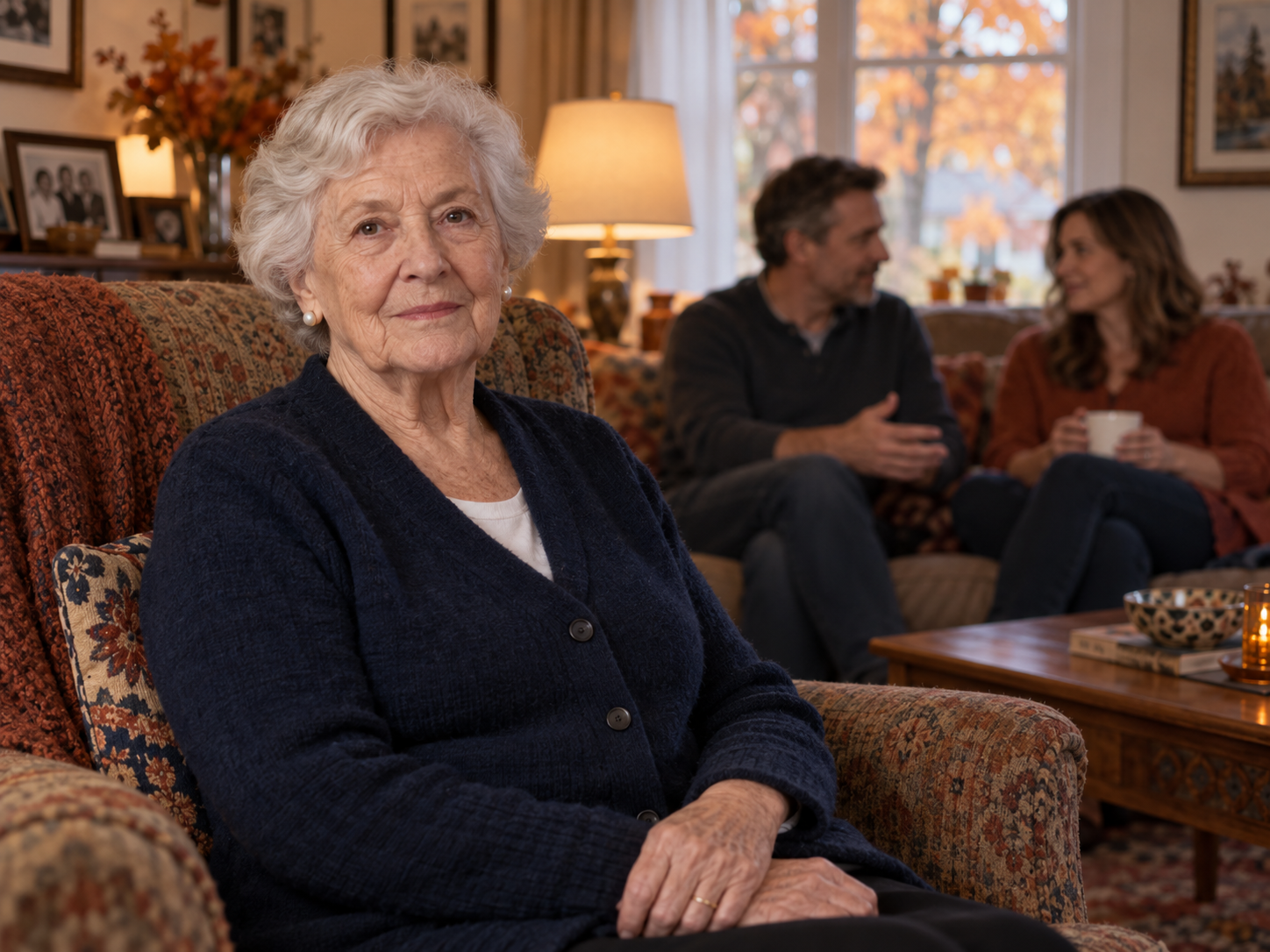
Most of what we publish is written for families. This one is different.
Over 25 years, we’ve sat in a lot of living rooms. We’ve heard older adults say versions of the same thing. Rarely all at once, and almost never to their own children.
So we’ve gathered it into one letter. Nobody wrote this exact note. But every line has been said to us in real kitchens, by people who love their families and wish they’d slow down.
Read it before your next conversation.
The Letter
Dear kids,
I know you’re worried. I’ve watched you look around my kitchen. I saw you check the fridge.
You think I didn’t notice. I noticed.
Here’s the thing. I worry too. More than I let on. I know I’m slower on the stairs. I know I asked you twice about your job.
But I need you to hear something first.
This is still my life.
I raised four children in this house. I buried your father in that church down the road. Every stubborn thing about me is the same stubborn thing that got us through 1987.
So when you arrive with a plan already made, it doesn’t feel like help. It feels like being retired from my own life.
Ask me before you decide. That’s all I’m asking.
Ask me what I want to keep doing. You might be surprised. It isn’t the driving I care about most. It’s getting to church on Sundays without having to phone anyone.
Solve that, and I’ll hand you the keys myself.
Let me try things my way first. If my way doesn’t work, I’ll tell you. I might take a while to admit it. I’ll get there.
And if I do need help, let me help choose it. Let me meet the person. Let me say whether they come Tuesdays or Thursdays. Those small choices are the difference between something being done for me and something being done to me.
One more thing.
I know some of my choices aren’t the ones you’d make. I’m not confused about the risks. I’ve just decided some things matter more than being safe every minute of the day.
You made choices I didn’t like once, too. I held my tongue. Mostly.
I don’t want to be managed. I want to be included.
That’s all.
Love, Mom
What That Letter Is Actually Asking For
Read it again and you’ll notice something. Almost nothing in it is a refusal.
She isn’t saying no to help. She’s saying no to being handed a decision.
Three things run through the whole letter. She wants to be asked first. She wants to keep choosing. And she wants her preferences to shape the plan, not just her problems.
That matters practically, not just emotionally. Help that someone chooses tends to stick. Help that arrives fully formed tends to get refused, cancelled, or quietly resented.
What Families Can Do
Ask about goals before you talk about problems
Most families open with what’s wrong. Try opening with what they want to protect.
“What would you most hate to give up?” is a better first question than any concern on your list. So is “What does a good week look like for you now?”
The answers become your blueprint. If church on Sundays is the priority, then the plan is a ride on Sundays. That’s a far easier conversation than one about driving.

Offer choices, even small ones
Control is built from small decisions, not big ones.
Mornings or afternoons? Tuesdays or Thursdays? Meet two caregivers and pick one? Each question hands back a little authority.
And say yes to their trial runs. “Let’s try it for a month and see” is often the sentence that unlocks everything.
Sort the paperwork while they’re leading it
This is the piece families delay until it’s urgent, which is exactly when it stops being their parent’s decision.
A power of attorney lets your loved one name who speaks for them if they ever can’t. The Government of Canada’s guide explains how these work, and notes that nobody should ever feel pressured into signing one. Rules differ by province, so a lawyer is worth the visit.
The same goes for health wishes. Advance Care Planning Canada offers free workbooks and conversation starters, with guidance for each province and territory.
Done early, this is your parent making decisions. Done late, it’s someone else making them instead.

Offer choices, even small ones
Control is built from small decisions, not big ones.
Mornings or afternoons? Tuesdays or Thursdays? Meet two caregivers and pick one? Each question hands back a little authority.
And say yes to their trial runs. “Let’s try it for a month and see” is often the sentence that unlocks everything.
Sort the paperwork while they’re leading it
This is the piece families delay until it’s urgent, which is exactly when it stops being their parent’s decision.
A power of attorney lets your loved one name who speaks for them if they ever can’t. The Government of Canada’s guide explains how these work, and notes that nobody should ever feel pressured into signing one. Rules differ by province, so a lawyer is worth the visit.
The same goes for health wishes. Advance Care Planning Canada offers free workbooks and conversation starters, with guidance for each province and territory.
Done early, this is your parent making decisions. Done late, it’s someone else making them instead.
When Their Choice Isn’t the One You’d Make
Here’s the part nobody enjoys.
A capable adult has the right to make choices their family disagrees with. That includes choices that carry risk. Staying in a two-storey house. Keeping the dog. Refusing the walker.
You don’t have to like it. You can say plainly that you’re worried, and why.
Then you stay close. Because the parent who feels respected will call you when something goes wrong. The one who feels policed will hide it until it’s a crisis.
Capacity is a real and separate issue, and it changes the picture. Are you seeing genuine confusion, memory loss, or poor judgment about money? That’s a medical conversation rather than a family debate. Start with their doctor.
How Professional Support Helps
The easiest help to accept rarely looks like help.
Our companionship care often starts small. Someone comes by for tea, drives to the grocery store, or sits and talks. Over time, it becomes the person who notices things and keeps your parent connected. Many clients describe their caregiver as a friend, not a service.
We also aim for consistency. The same caregiver, the same days, so trust has room to build.
For families managing memory changes, our dementia and Alzheimer’s care team is trained to preserve choice wherever it still exists. Even when someone can’t decide everything, they can usually decide something. That matters more than most people realize.
And your loved one can meet a caregiver before committing to anything. That single step turns care into a choice.

Read the Letter Together
Our free October booklet is called Around the Table: Noticing Changes and Starting the Care Conversation. Inside is a shorter version of this letter.
Some families read it out loud together. It gives a parent words they’ve been struggling to find. And it lets adult children hear the message without an argument.
Frequently Asked Questions
My parent refuses all help. What now?
Ask what they’d be willing to try, rather than proposing something yourself. Then start smaller than you think you need to. A few hours a week is a real beginning.
Do I have the right to override my parent’s decisions?
Not while they’re capable, in most cases. Powers of attorney generally take effect only when someone can no longer decide for themselves. A lawyer can explain how this works in your province.
Can my loved one meet a caregiver before deciding?
Yes. We arrange introductions in Ottawa, Mississauga, Markham, Pickering-Ajax, Oshawa-Whitby, and Edmonton. Your loved one always has a say in the match.
Start With a Conversation, Not a Plan
If you’ve been carrying a plan your parent hasn’t agreed to, you’re not alone. Most families arrive that way.
We’ll help you turn it into something they can say yes to.
Call 1-866-372-0603 and let’s talk it through.
Every family’s situation is unique, but no one should have to navigate senior care alone. Ideal Caregivers 4U provides personalized, non-medical in-home support that helps seniors remain safe, comfortable, and independent at home while giving families true peace of mind.
Learn how we can help by clicking the link below or calling us at
1-866-372-0603