
Suggest an art project to many seniors, and you’ll hear the same three words: “I’m not creative.”
It comes out almost reflexively — a polite way of closing the door before the conversation starts. And it stops countless older adults from discovering activities that could bring them real joy, calm, and connection.
Here’s the problem with that objection: it’s built on a misunderstanding of what creativity actually is. This week, as part of our August series on keeping seniors active, engaged, and connected, we’re gently taking apart “I’m not creative” — and showing families what to do when they hear it.

The Objection Underneath the Objection
When a senior says “I’m not creative,” they almost never mean “I don’t want to.” Usually they mean one of these:
- “I’m not talented, so there’s no point.”
- “I’ll make something bad and feel embarrassed.”
- “Art is for artists, and that was never me.”
Notice what all three share: they’re about product, not process. They assume creativity is measured by the quality of the finished piece — and that judgment is exactly what makes people freeze.
But creative expression isn’t about talent or results. It’s about the act of expressing something, and every single person has something to express. Once the pressure to “be good” lifts, the door swings open.
Why Creativity Matters More Than Families Realize
This isn’t just feel-good encouragement. The benefits are real and well-documented.
According to the National Institute on Aging, research on singing groups, theatre programs, and visual arts suggests that participating in the arts may improve the health, well-being, and independence of older adults — and that music, in particular, can help reduce behavioural symptoms of dementia such as stress, agitation, and apathy while promoting social interaction.
Creative activities reduce stress, ease anxiety, exercise fine motor skills, and offer an emotional outlet when words fall short. For seniors living with dementia, creativity often reaches places ordinary conversation can’t — unlocking expression and memory that seemed out of reach. In every case, the finished product matters far less than what happens during the making.
Answering “I’m Not Creative” — Gently
The goal is never to argue. It’s to lower the stakes until the objection simply loses its grip.
Reframe it as spending time, not making art
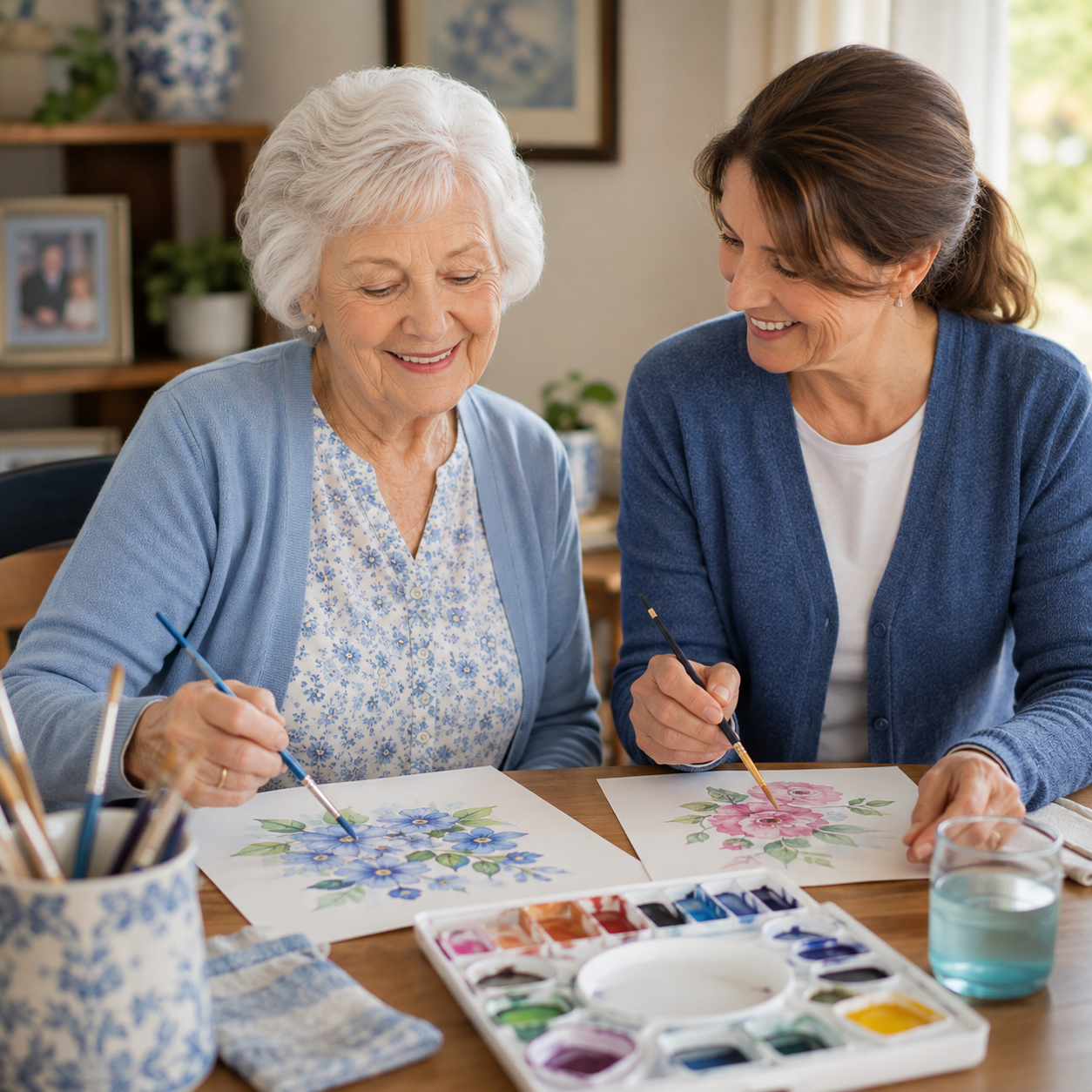
Don’t announce an “art project.” Invite your loved one to keep you company while you paint, colour, or arrange flowers — and leave supplies within easy reach. Framed as time together rather than performance, participation tends to follow on its own.
Start with activities that have no wrong answers
Adult colouring books, simple watercolours, arranging flowers, or pressing garden clippings carry zero risk of “getting it wrong.” When there’s no standard to fail against, the fear of embarrassment has nothing to hold onto.
Lean on the creativity they already have
Most people are more creative than they realize. The senior who gardens, cooks from memory, tells a great story, hums while working, or once sewed their own curtains is already creative — just not in a frame on a wall. Naming that can quietly dissolve the whole objection.
What Families Can Do
Bring music into everyday moments
Music may be the easiest door of all. Singing along to old favourites, playing an instrument from years past, or simply listening to a playlist from their youth all count. Music reaches emotional and memory centres of the brain that stay remarkably resilient, even in later stages of cognitive change.
Choose crafts that fit today’s abilities
A beloved craft doesn’t have to be abandoned as dexterity changes — it adapts. Larger knitting needles, pre-cut materials, or sharing the fiddly steps keep knitting, woodwork, and scrapbooking within reach. Meeting the ability where it is protects both the activity and the pride that comes with it.
Invite storytelling
Storytelling is creativity in its oldest, most natural form — and almost no one refuses it. Prompt it with an old photo, a piece of music, or a question like “What was your first job really like?” Record the answers when you can; they’re engagement today and a family treasure tomorrow.
Get the Complete Picture
Creative expression is the fifth of six pillars in our free August resource, The Complete Guide to Keeping Seniors Active, Engaged, and Connected. It covers physical activity, cognitive engagement, social connection, purpose, creativity, and a full year of activity ideas — plus a simple weekly engagement checklist families can start using right away. Download your copy and follow along all month.

Frequently Asked Questions
My parent insists they have no creative ability. How do I start? Skip the word “art” entirely. Begin with low-pressure activities like colouring or listening to music together, framed as spending time rather than making something. Confidence grows once the fear of judgment is gone.
What creative activities work well for seniors with dementia? Music, simple visual art, and storytelling are especially powerful. They tap into parts of the brain that stay resilient, offering expression and calm even when words become difficult.
Can a caregiver lead creative activities at home? Yes. Ideal Caregivers 4U companion caregivers in Ottawa, Mississauga, Edmonton, Markham, Pickering-Ajax, and Oshawa-Whitby regularly bring crafts, music, and creative activities into the home, drawing on our monthly Senior Activity Booklet for fresh ideas.
Every family’s situation is unique, but no one should have to navigate senior care alone. Ideal Caregivers 4U provides personalized, non-medical in-home support that helps seniors remain safe, comfortable, and independent at home while giving families true peace of mind.
Learn how we can help by calling 1-866-372-0603 or clicking the link below: