
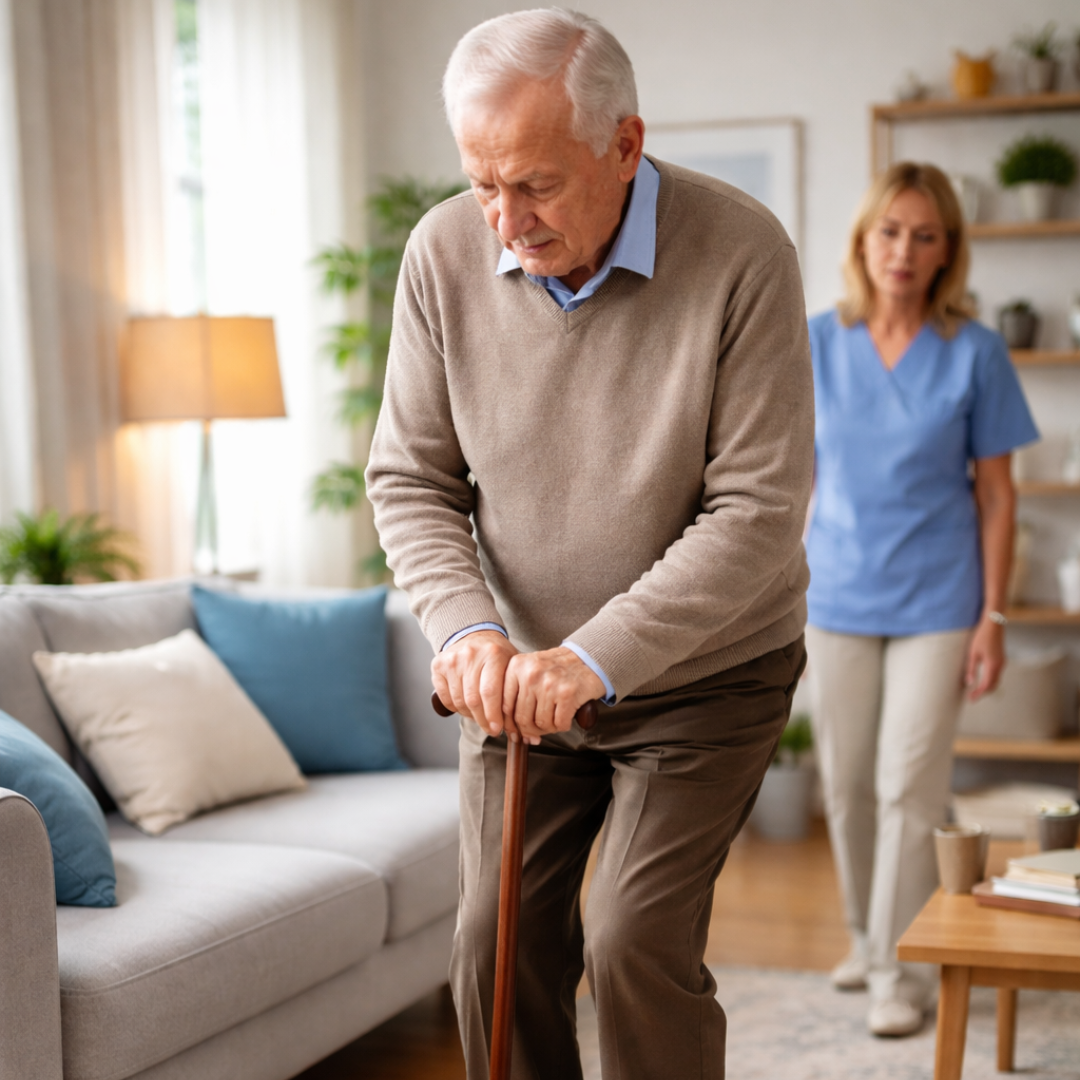
Picture this: your loved one is walking from the living room to the kitchen — a path they’ve taken a thousand times — and suddenly they stop. Their feet won’t move. They know where they want to go, but their body isn’t cooperating. It lasts only a few seconds, but it feels much longer for everyone in the room.
This is called a freezing episode, and it’s one of the most common — and most misunderstood — movement challenges in Parkinson’s disease. If you’ve witnessed it, you know how unsettling it can be. If you haven’t yet, it’s worth understanding before it happens.
What Is Freezing of Gait?
Freezing of gait (FOG) is a temporary, involuntary inability to initiate or continue walking — even when the person fully intends to move. The brain, in essence, loses its ability to send the signal that gets the feet going.
It tends to happen at predictable moments: starting to walk after standing still, approaching a doorway or narrow space, turning corners, or navigating crowded or visually busy environments. Stress and distraction can make it worse.
What’s important to understand is that the person is completely conscious and aware during a freeze. They’re not confused — they’re frustrated. Their mind is working; it’s the connection between intention and movement that breaks down temporarily. This requires special care from a caregiver from idealcaregivers4u.
Why It’s More Dangerous Than It Looks
A freeze that lasts a few seconds might seem minor, but the risks it creates are anything but. The danger usually comes not from the freeze itself, but from what happens next.
When someone tries to force their way out of a freeze — by shuffling, rocking, or lunging forward — they can easily lose their balance and fall. Add in the fact that freezing often happens in high-risk spots like doorways, bathrooms, or near stairs, and the stakes become clear. Falls related to freezing are one of the leading causes of injury and hospitalization among people with Parkinson’s.
Frequency matters too. For many people, freezing episodes become more common as Parkinson’s progresses — which means a family that managed safely last year may need to reassess this year.
Other Movement Challenges That Compound the Risk
Freezing rarely happens in isolation. Parkinson’s affects movement in several interconnected ways that together create a more complex picture:
- Bradykinesia (slowness of movement) makes everyday tasks take longer and increases fatigue
- Rigidity causes muscle stiffness that affects posture and fluid movement
- Shuffling gait — short, dragging steps — reduces stability and increases the chance of tripping
- Postural instability makes it harder to recover balance after a stumble or sudden stop
- Reduced arm swing affects overall balance during walking and is often one of the earliest signs
Understanding how these challenges interact helps families anticipate risk rather than just react to it.
How to Respond Safely in the Moment
When a freeze happens, the instinct is often to grab the person or urge them to keep moving. In most cases, that’s the wrong approach. Here’s what actually helps:
Stay calm. Anxiety is contagious, and a tense response can make the episode worse. A steady, reassuring voice goes a long way.
Don’t pull or push. Physically forcing movement can throw off balance and cause a fall.
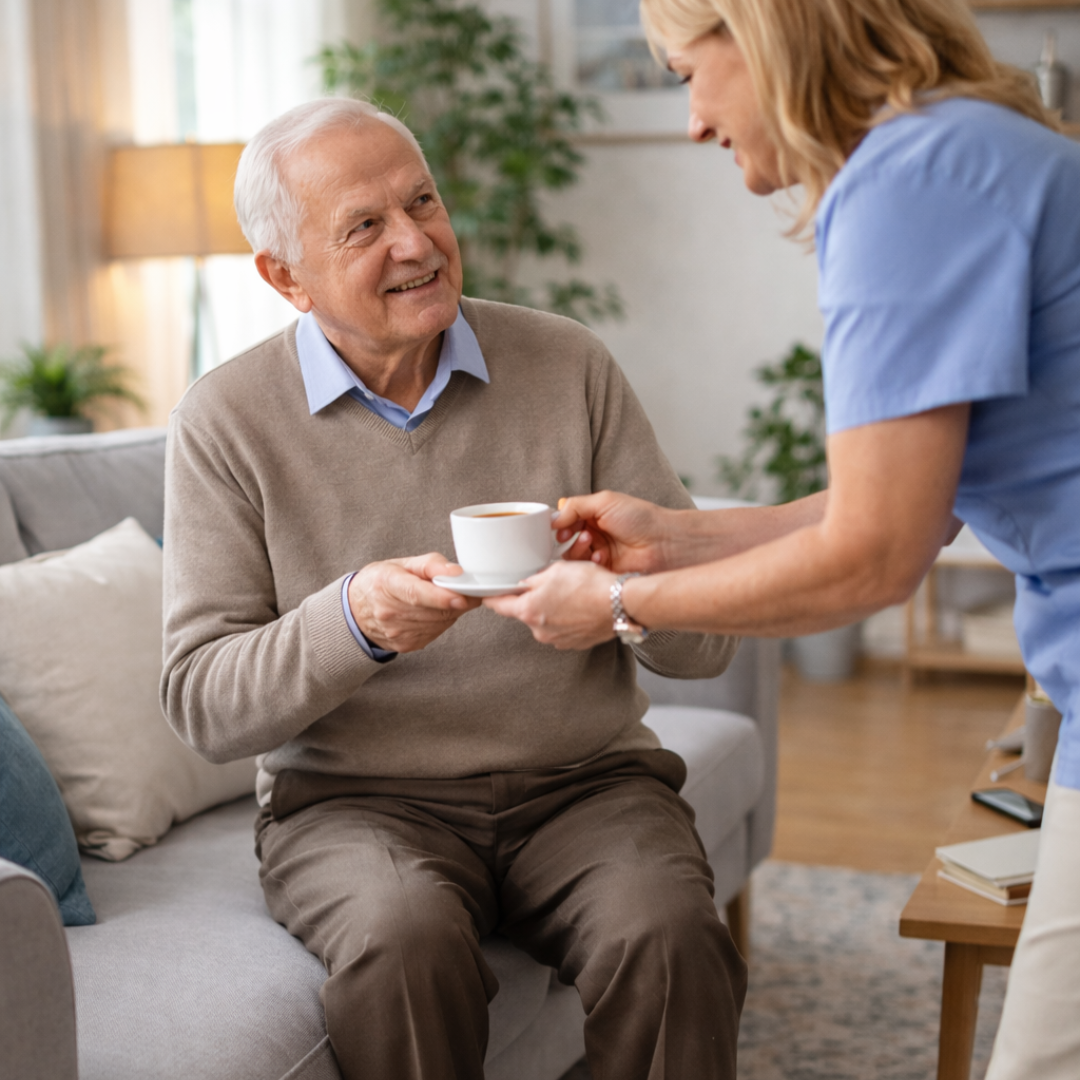
Use rhythmic cues. Count out loud — “1, 2, 3, step” — or play music with a steady beat. Many people with Parkinson’s respond remarkably well to rhythm as a way to restart movement.
Try a visual target. Place your foot in front of theirs as something to step over, or point to a spot on the floor just ahead. Visual prompts can help the brain bridge the gap.
Give it time. If cues aren’t working immediately, let the episode pass naturally rather than escalating. Clear any nearby obstacles quietly while you wait.
If freezing episodes are becoming more frequent or are leading to near-falls, that’s a strong signal it’s time to revisit your senior care at home plan.
The Home Environment Matters More Than You Think
Many freezing triggers are environmental — and that means they can be addressed. A professional eye of a caregiver can catch hazards that families have stopped noticing simply because they’ve become familiar.
Some of the most effective modifications are also the simplest: removing rugs and floor transitions, improving lighting at doorways, using contrast tape or coloured floor markers as visual stepping cues, and creating clear, unobstructed walking routes through main living areas. Grab bars in the bathroom and strategically placed chairs for rest points can also make a significant difference.
At Ideal Caregivers 4U, our senior home safety assessments and fall prevention assessments are specifically designed to identify these risks and recommend practical solutions. We work with families across Ottawa, Kingston, and the Greater Toronto Area to make the home environment as safe and supportive as possible.

When It’s Time to Bring In Professional Support
There comes a point in many Parkinson’s journeys where it’s no longer safe — or sustainable — for a family to manage movement challenges alone. That point looks different for every family, but some common indicators include: freezing episodes happening regularly, a recent fall or near-fall, daily tasks like bathing or dressing becoming unsafe, or family caregivers running on empty.
Our PSW (Personal Support Worker) caregivers are trained to assist with safe mobility and transfers, personal care, meal preparation, and medication reminders. Our companion caregivers provide supervision, engagement, and the kind of steady presence that reduces the risk of unsupervised falls. And for family caregivers who need a break, respite care ensures your loved one is in good hands while you take time to recharge.
An in-home care assessment is the best place to start — it gives your family a clear, personalized picture of where support is needed and what a care plan could look like.
Frequently Asked Questions
What is freezing of gait in Parkinson’s disease? Freezing of gait is a temporary, involuntary inability to initiate or continue walking, even when the person intends to move. It commonly occurs when starting to walk, approaching doorways, or turning. The person is fully conscious during the episode, which typically lasts a few seconds but significantly increases fall risk.
Why is freezing dangerous for people with Parkinson’s? The primary danger comes from attempts to break out of the freeze — shuffling or lunging forward can cause a loss of balance and a fall. Episodes near stairs, in the bathroom, or when the person is alone are especially high-risk. Falls related to freezing are a leading cause of injury and hospitalization in people with Parkinson’s.
How do you help someone with Parkinson’s who is freezing? Stay calm and avoid pulling or pushing. Use rhythmic verbal cues like counting (“1, 2, 3, step”), offer a visual target on the floor to step toward, or try music with a steady beat. If cues aren’t immediately effective, allow the episode to pass naturally and clear the surrounding area of obstacles.
What home modifications help with Parkinson’s movement challenges? Removing rugs and floor transitions, improving doorway lighting, using contrast tape at thresholds, installing grab bars, and creating clear walking paths all help reduce freezing triggers and fall risk. A professional senior home safety or fall prevention assessment can identify hazards specific to your loved one’s home.
When should I consider in-home care for Parkinson’s movement challenges? Consider in-home care when freezing episodes are becoming more frequent, when a fall or near-fall has occurred, when daily tasks have become unsafe to manage alone, or when family caregivers are overwhelmed. An in-home care assessment is a helpful first step to determine the right level of support.
Does Ideal Caregivers 4U provide Parkinson’s support in Ottawa and the GTA? Yes. Ideal Caregivers 4U provides PSW caregivers, companion caregivers, respite care, and in-home care, fall prevention, and senior home safety assessments for families in Ottawa, Kingston, Mississauga, Pickering, Ajax, Whitby, and Oshawa.
You Don’t Have to Figure This Out Alone
Freezing and movement challenges are hard to witness — and harder to manage without the right knowledge and support. But with the right environment, the right responses, and the right team beside you, your loved one can continue to live safely and with dignity at home.
Ideal Caregivers 4U is here to help families across Ottawa, Kingston, and the Greater Toronto Area take that next step with confidence. Reach out today to book an in-home assessment and find out how we can help.

Every family’s situation is unique, but no one should have to navigate senior care alone. Ideal Caregivers 4U provides personalized, non-medical in-home support that helps seniors remain safe, comfortable, and independent at home while giving families true peace of mind.
Learn how we can help by clicking the link below or calling us at
1-866-372-0603