
For seniors living with Parkinson’s, safety at home isn’t just about preventing falls — it’s about creating an environment that works with the condition, not against it.
Small details can either support movement or make it more difficult. And often, it’s the overlooked things that matter most.

1. Start with Pathways, Not Just Rooms
Most safety advice focuses on individual rooms. But for someone with Parkinson’s, movement between spaces is often where challenges occur.
Pay attention to:
- Doorways (common areas for freezing episodes)
- Tight turns between furniture
- Hallways with obstacles
- Transitions between flooring surfaces
Practical steps:
- Create clear, straight walking paths throughout the home
- Widen turning areas where possible
- Keep flooring consistent to reduce hesitation
If your loved one is working with a professional caregiver, they can help identify and address problem areas during regular visits — something our mobility support services at Ideal Caregivers 4U routinely include.
2. Rethink Furniture Placement
Furniture can either support stability — or create risk.
Practical steps:
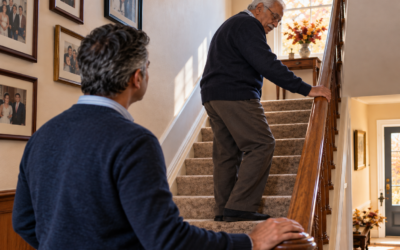
- Position sturdy furniture along walking paths so it can be used for support
- Remove low or unstable pieces that are difficult to rise from
- Ensure chairs have armrests to make standing easier
- Clear sharp corners from high-traffic areas
Even small layout changes can improve confidence and reduce daily risk.
3. Focus on “Transition Points”
Transitions — sitting to standing, standing to walking, turning, entering or exiting a room — are among the most physically demanding moments for someone with Parkinson’s.
Practical steps:
- Ensure stable surfaces are nearby at every transition point
- Allow extra space so movement isn’t rushed or cramped
- Minimize distractions during these moments
Our personal care and mobility support caregivers are trained to assist with exactly these transitions, helping reduce the risk of falls while preserving your loved one’s sense of independence.
4. Optimize Lighting for Clarity and Confidence
Lighting isn’t just about brightness — it’s about visibility and consistency. Poor lighting increases hesitation and confusion.
Practical steps:
- Install bright, even lighting throughout the home
- Add motion sensor lights for nighttime movement
- Eliminate shadows in hallways and corners
- Place night lights between the bedroom and bathroom
Clear visibility supports safer, more confident movement at any hour.

5. Make Everyday Items Easier to Access
Reaching, bending, and stretching can all increase fall risk — especially during routine tasks.
Practical steps:
- Keep frequently used items at waist height
- Reduce the need to reach overhead
- Organize key spaces like the kitchen and bathroom for easy access
- Switch to easy-to-open containers where possible
Our meal preparation caregivers can also help structure kitchen routines in a way that minimizes physical strain while ensuring your loved one stays well nourished.
6. Adjust the Bathroom for Stability and Ease
The bathroom is one of the most challenging spaces in the home for seniors with Parkinson’s — and safety goes beyond basic grab bars.
Practical steps:
- Install a raised toilet seat for easier transfers
- Add a handheld shower head for better control
- Use a shower chair to reduce fatigue
- Ensure flooring is non-slip and secure
Also, ensure everything needed is within easy reach before starting a routine — this reduces mid-task movement and risk.
7. Reduce Distractions During Movement
Parkinson’s affects focus and coordination. Too much stimulation can increase hesitation or trigger freezing episodes.
Practical steps:
- Minimize background noise when your loved one is moving through the home
- Avoid multitasking (such as walking while carrying items)
- Encourage slow, focused movement
A calm, structured environment makes a real difference — and it’s something professional caregivers actively support during their time in the home.
8. Plan for High-Risk Times of Day
Safety isn’t just about space — it’s also about timing. Many seniors experience increased difficulty during:
- Early mornings
- Late evenings
- Periods of fatigue
- Medication “off” times
Practical steps:
- Schedule higher-risk activities (bathing, cooking) during peak energy times
- Reduce solo activity during known low periods
- Use medication reminders to help maintain consistent timing, which can reduce the frequency and severity of “off” periods
At Ideal Caregivers 4U, our caregivers can be scheduled around these patterns — providing extra support exactly when it’s needed most. Families managing this on their own may also benefit from respite care to avoid caregiver burnout during demanding times of day.

Frequently Asked Questions: Home Safety for Seniors with Parkinson’s
What are the biggest home safety risks for someone with Parkinson’s? The most common risks include falls during transitions (such as standing up or turning), poor lighting that increases hesitation, and bathroom hazards. Addressing pathways, furniture placement, and high-risk times of day can significantly reduce these risks.
What home modifications help seniors with Parkinson’s stay safe? Key modifications include creating clear walking paths, installing grab bars and a raised toilet seat, improving lighting (especially at night), and positioning sturdy furniture along commonly used routes. Keeping frequently used items at waist height also reduces unnecessary reaching and bending.
How can a caregiver help with Parkinson’s home safety in Ottawa? A professional in-home caregiver can assist with mobility support, personal care during high-risk routines like bathing, medication reminders to maintain consistent dosing schedules, and meal preparation in a way that reduces physical strain. At Ideal Caregivers 4U, we tailor our support to the specific safety needs of each client in Ottawa.
When should I consider professional in-home care for a loved one with Parkinson’s? If your loved one is experiencing frequent near-falls, struggling with daily routines, or if you’re feeling the strain of caregiving, it may be time to explore professional support. Respite care is also a valuable option for family caregivers who need a break without compromising their loved one’s safety.
Learn More About Parkinson’s Care at Home
Creating a safe home environment is just one part of the bigger picture.
👉 For a complete guide to supporting a loved one with Parkinson’s at home, read our The Ultimate Guide to Parkinson’s Care at Home
Every family’s situation is unique, but no one should have to navigate senior care alone. Ideal Caregivers 4U provides personalized, non-medical in-home support that helps seniors remain safe, comfortable, and independent at home while giving families true peace of mind.
Learn how we can help by clicking the link below or calling us at
1-866-372-0603