
Most families know the basics. Remove the loose rugs. Install a grab bar in the shower. Keep the hallways clear.
But falls don’t always happen for obvious reasons — and the hazards that send seniors to the emergency room are often the ones nobody thought to look for. The ones hiding in plain sight.
Falls are the leading cause of injury-related hospitalizations among adults 65 and older in Canada. According to Parachute Canada, more than one in three seniors will experience a fall each year, and the consequences — fractures, head injuries, loss of confidence, and reduced mobility — can be life-altering. The good news is that the majority of falls are preventable, and prevention starts with knowing exactly where to look.
This May, as part of our commitment to helping seniors live safely and independently at home, we’re going deeper than the standard checklist.
Why Falls Happen — And Why the Obvious Fixes Aren’t Always Enough
Falls rarely have a single cause. Most happen because several small risk factors collide at the wrong moment — a dimly lit hallway, a slightly uneven threshold, a moment of dizziness from a medication, and an ill-fitting pair of slippers all come together in one unlucky second.
That’s why surface-level fixes only go so far. Real fall prevention means looking at the home — and the person living in it — as a whole picture.
As we covered in our Complete Guide to Helping Your Senior Loved One Thrive at Home, fall prevention is one of the highest-impact areas families can address. Here we’re going further — room by room, hazard by hazard.
The Most Overlooked Fall Hazards — Room by Room
The Bathroom
The bathroom is the most common room for falls, but not always for the reasons families expect. Yes, wet floors are a risk — but these are the hazards that get missed:
- The transition from bath mat to tile. Even a non-slip mat with a bevelled edge creates a subtle lip that can catch shuffling feet. Look for ultra-low-profile mats or consider removing them entirely if grab bars are already in place.
- The toilet height. Standard toilets sit too low for many seniors, requiring significant leg strength to sit and rise safely. A raised toilet seat is an inexpensive, high-impact fix.
- Reaching for items in the shower. Shampoo on a high shelf, soap in an awkward corner — these small reaches cause big problems. A simple shower caddy at arm height eliminates the need to stretch or bend.
- Towel bars used as grab bars. This one is critical. Towel bars are not weight-bearing. If your loved one is using one to steady themselves, it will eventually pull out of the wall. Replace with properly anchored grab bars — or add them alongside.
The Kitchen
- Items stored too high or too low. Reaching overhead or bending toward low cabinets shifts the body’s centre of gravity dramatically. Reorganize the kitchen so the most-used items live between hip and shoulder height.
- Wet floors after washing dishes. A small anti-fatigue mat in front of the sink with a non-slip base addresses both comfort and safety.
- Step stools. Any step stool without a handle is a fall waiting to happen. If your loved one is still using one regularly, it’s time to either replace it with a handled version or reorganize so it’s no longer needed.
- Pet bowls and pet toys on the floor. Easy to overlook, impossible to see when carrying dishes. Keep pet items in a consistent, out-of-the-way corner.
The Bedroom
- The path to the bathroom at night. This is one of the highest-risk moments of the day — disoriented, half-asleep, navigating in low light. Motion-activated nightlights along the route are a simple, effective solution.
- Bed height. If the bed is too low, getting in and out requires significant effort and balance. If it’s too high, the feet may not reach the floor comfortably. Adjust with bed risers or a lower frame as needed.
- Loose or long bedding that reaches the floor. A tripping hazard that’s easy to overlook when making the bed. Fitted, properly sized bedding is safer.
- Reaching for items on the nightstand. A glass of water, reading glasses, a phone charger — if these require leaning or stretching from a seated position on the bed, they’re worth repositioning.
Stairs and Transitions
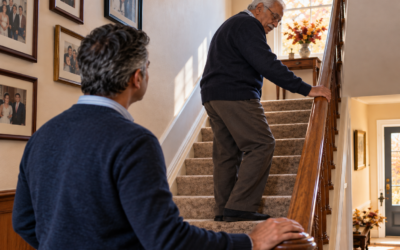
- Uneven or worn stair edges. Over time, carpet on stairs compresses unevenly and edges become irregular. Add non-slip stair treads or have worn carpet replaced.
- Door thresholds. The small raised strips between rooms — particularly between carpet and hardwood — are a consistent tripping hazard for shuffling gaits. Transition threshold ramps are inexpensive and easy to install.
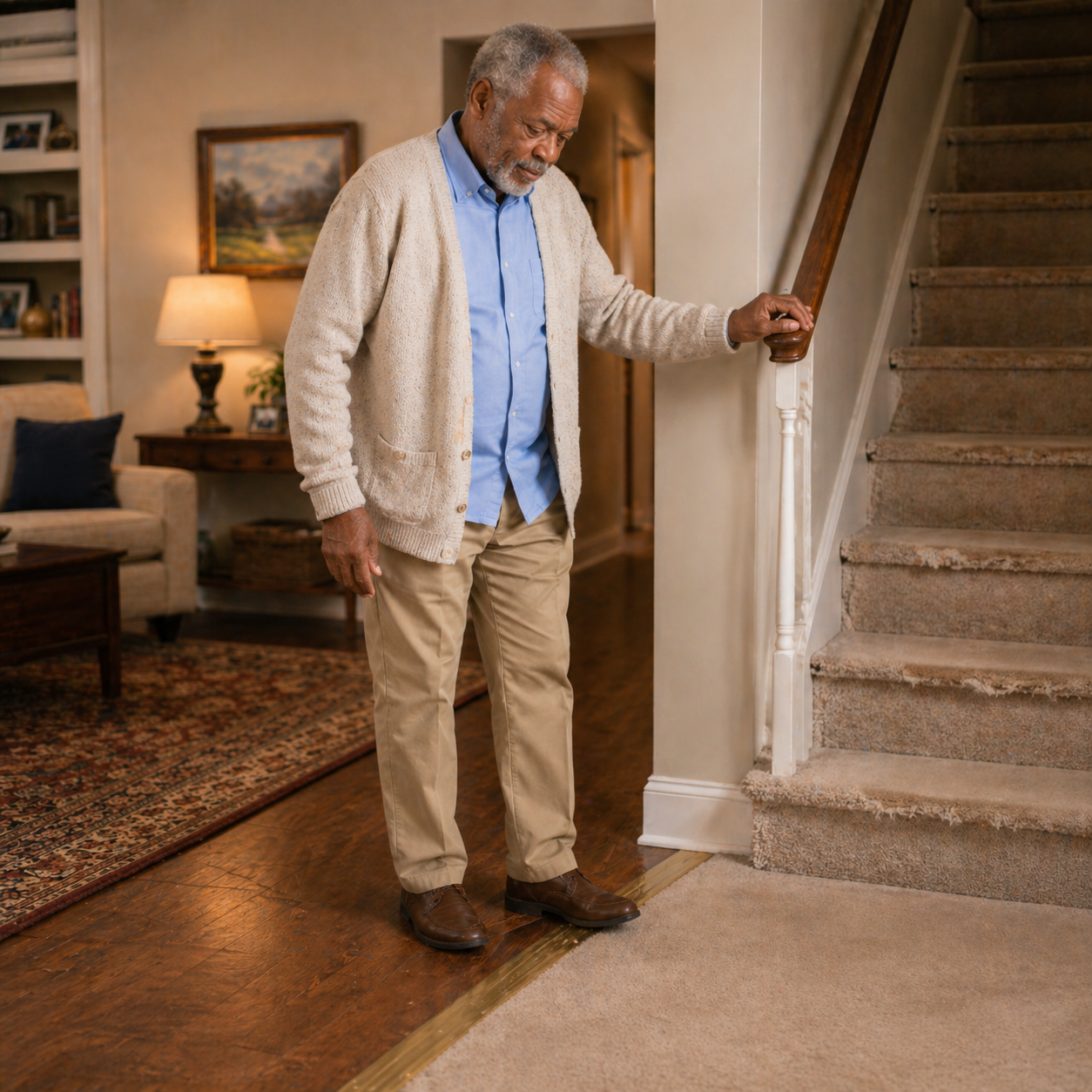
- Exterior steps without handrails on both sides. Many homes only have a railing on one side. If your loved one favours one hand or has weakness on one side, the railing needs to be on the correct side — or both sides.
- The front entrance in wet weather. Wet shoes on a hard floor create a slipping hazard the moment someone walks in the door. A textured entry mat both inside and outside the door, plus a nearby bench or wall support for removing shoes, makes a real difference.
The Living Room
- Furniture that’s too low or too soft. Deep sofas and low armchairs are extremely difficult to rise from safely. Firm seat cushions and chairs with armrests that extend forward make standing up easier and safer.
- Extension cords and lamp cords crossing traffic areas. These are easy to trip over and easy to fix — run cords along baseboards and secure with cord clips.
- Coffee tables with sharp corners at shin height. Consider whether the coffee table is truly necessary, or whether a smaller side table would serve the same purpose with less risk.
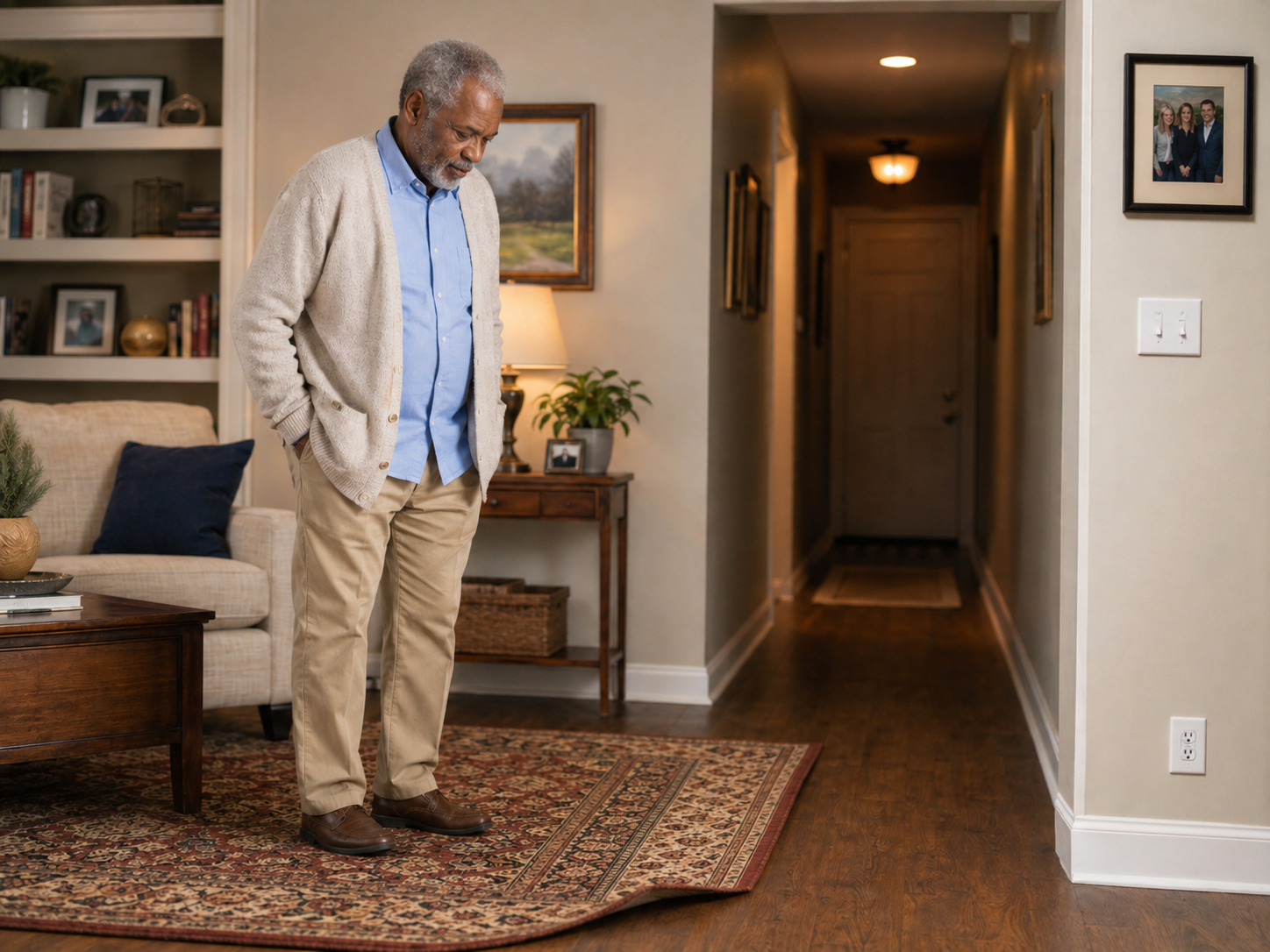
- Area rugs. Even secured rugs present a risk if the edges curl. Check the perimeter regularly and use double-sided carpet tape or non-slip backing throughout.
The Hazards That Aren’t in the Home at All
Fall prevention isn’t only about the physical environment. These personal factors contribute just as significantly — and are often missed in a standard home safety review:
Footwear. Worn-down soles, loose slippers, or socks without grip are among the most common fall contributors. The ideal indoor shoe has a firm, non-slip sole, a closed heel, and a snug fit.
Medications. Many common medications — blood pressure drugs, sleep aids, antihistamines, and certain antidepressants — cause dizziness, low blood pressure on standing, or delayed reaction time. If your loved one has experienced a fall or near-miss, a medication review with their doctor or pharmacist is a critical step.
Vision. Uncorrected vision changes affect depth perception and the ability to see floor hazards clearly. An annual eye exam is one of the simplest fall prevention tools available.
Dehydration. Mild dehydration causes lightheadedness, particularly when standing up quickly. Seniors are more susceptible to dehydration and less likely to feel thirsty — making regular fluid intake a daily priority.
Having a companion caregiver in the home regularly also serves a purpose beyond companionship — a familiar, trained presence notices changes in mobility, balance, and daily habits that family members who visit less frequently may miss entirely.
Practical Steps: Where to Start
If you’re feeling overwhelmed by the list, start here — these are the highest-impact changes you can make today:
- Walk through the home room by room with fresh eyes — ideally with someone who hasn’t been there every day and can spot what’s become invisible
- Check all lighting — every hallway, stairwell, and bathroom — and replace any bulbs that have dimmed
- Do a footwear audit — replace any slippers or indoor shoes with worn soles immediately
- Call the doctor and ask for a medication and fall-risk review
- Book a professional senior home safety assessment — one of the most valuable and most skipped steps families can take.
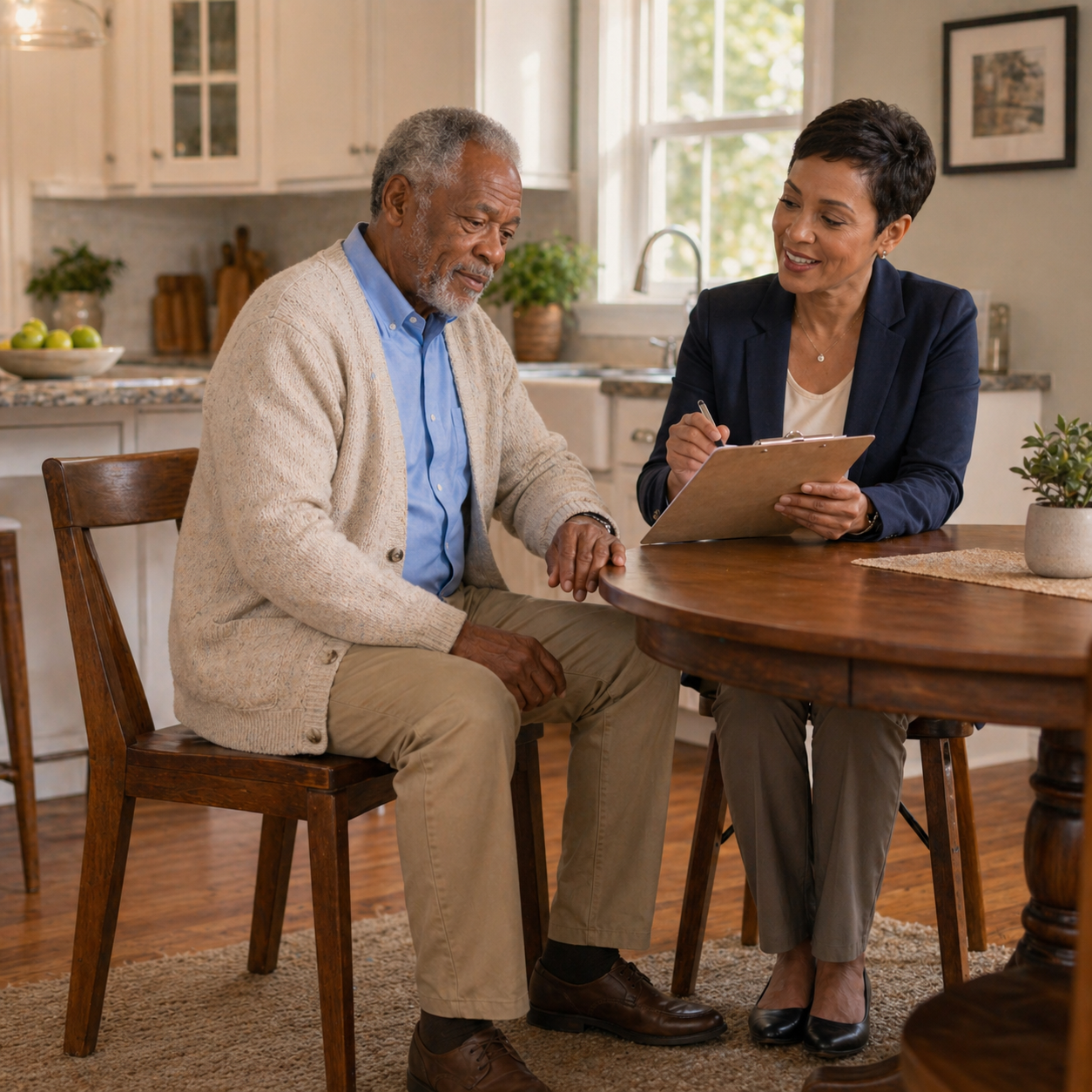
That last step is one many families skip — and one of the most valuable. A professional in-home safety assessment looks at your loved one’s specific home, mobility, and daily routines to identify the risks that a general checklist won’t catch.
At Ideal Caregivers 4U, our team provides senior home safety assessments for families in Ottawa, Kingston, and the Greater Toronto Area. If you’d like to take that step, we’re here to help — call us at 1-866-372-0603 or visit idealcaregivers4u.com/services to learn more.
Frequently Asked Questions
When should I consider increasing care for someone with Parkinson’s? You should consider increasing care when your loved one is experiencing more frequent falls, struggling with daily tasks like bathing or dressing, missing medications, losing weight, or showing signs of depression. Caregiver burnout is also a key signal that additional professional support is needed.
What kind of in-home care is available for Parkinson’s patients in Ottawa and the GTA? Families in Ottawa, Kingston, Mississauga, Pickering, Ajax, Whitby, and Oshawa can access PSW caregivers for personal care, mobility support, meal preparation, and medication reminders, as well as companion caregivers for social engagement and daily assistance. Home safety and fall prevention assessments are also available to identify risks before they become emergencies.
How do I know if my parent needs a PSW or a companion caregiver? A PSW is appropriate when your loved one needs hands-on physical assistance — such as help with bathing, dressing, or mobility. A companion caregiver is a great fit when the primary need is social engagement, light household support, or supervision. Many families benefit from a combination of both, and an in-home care assessment can help determine the right fit.
What is a fall prevention assessment for Parkinson’s? A fall prevention assessment evaluates your loved one’s home environment and mobility to identify hazards that increase fall risk — such as loose rugs, poor lighting, or unsafe bathroom setups. It also reviews the individual’s movement patterns and recommends practical changes and supports to reduce the chance of a fall.
Does Ideal Caregivers 4U provide care assessments in Ottawa and the GTA? Yes. Ideal Caregivers 4U offers in-home care assessments, senior home safety assessments, and fall prevention assessments for families in Ottawa, Kingston, Mississauga, Pickering, Ajax, Whitby, and Oshawa. These assessments help families understand their loved one’s current needs and create a personalized care plan.
Every family’s situation is unique, but no one should have to navigate senior care alone. Ideal Caregivers 4U provides personalized, non-medical in-home support that helps seniors remain safe, comfortable, and independent at home while giving families true peace of mind.
Learn how we can help by clicking the link below or calling us at
1-866-372-0603