
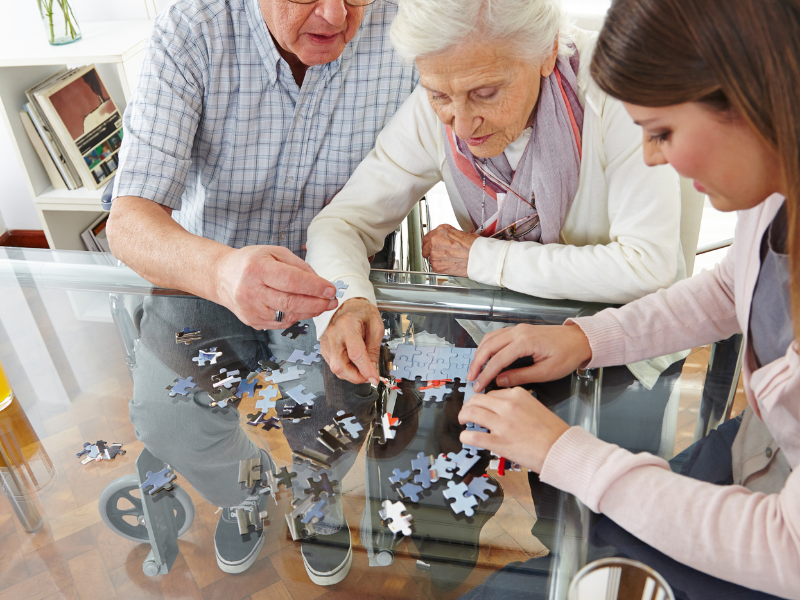
Staying mentally active is just as important as maintaining physical health — especially for seniors and those living with dementia. One simple yet highly effective way to support cognitive strength is through puzzles and brain games. These activities provide stimulation, enjoyment, and a sense of accomplishment, making them a valuable addition to any senior’s daily routine.
At Ideal Caregivers 4U, we encourage families and caregivers to incorporate fun, accessible brain challenges that help keep the mind engaged and the spirit uplifted.

Why Puzzles and Brain Games Matter
As the brain ages, certain cognitive functions naturally slow down. Memory loss, reduced attention span, and difficulty processing information can become more noticeable. For seniors with dementia, these changes are often more significant — but meaningful cognitive exercises can help.
Brain games and puzzles:
1. Strengthen Cognitive Pathways
Activities like crosswords, Sudoku, and word searches stimulate parts of the brain responsible for memory, language, recognition, and critical thinking. Each time a senior completes a puzzle, they’re exercising neural pathways that can slow cognitive decline.
2. Improve Focus and Attention
Working on a puzzle requires concentration, helping seniors practice holding attention for longer periods. Even small tasks like matching pictures or finding words can enhance mental endurance.
3. Support Emotional Well-Being
Finishing a puzzle brings pride and satisfaction. These positive emotions boost confidence and create meaningful moments of joy. For seniors with dementia, success in small, manageable tasks can be incredibly reassuring.
4. Encourage Routine and Structure
In dementia care, routine is essential. Incorporating a daily puzzle or brain game provides predictability and comfort while stimulating the mind at the same time.
5. Promote Social Interaction
Puzzles can be done together with caregivers or family members, encouraging connection and reducing isolation. Shared activities spark conversation, smiles, and bonding.

How to Introduce Brain Games Successfully
-
Choose activities at the right difficulty level: Too hard becomes frustrating; too easy becomes boring.
-
Keep sessions short: 10–15 minutes is often ideal.
-
Celebrate small wins: Every completed word or matched card is progress.
-
Make it enjoyable: Play soothing music, sit in good lighting, and create a calm atmosphere.
A Simple Activity With a Big Impact
Puzzles and brain games may seem small, but their benefits are significant. They stimulate the mind, build confidence, reduce anxiety, and bring joy into the daily lives of seniors — especially those experiencing memory loss.
At Ideal Caregivers 4U, we integrate brain-boosting activities into our care plans to support cognitive health and overall well-being. Small steps truly do make a big difference.